Overland Park, KS · Garage Door Service
Gardner homes built mostly around 2002 are hitting factory hardware's 20-year mark. We bring the parts from Overland Park, 14 miles out, and fix it the same visit.
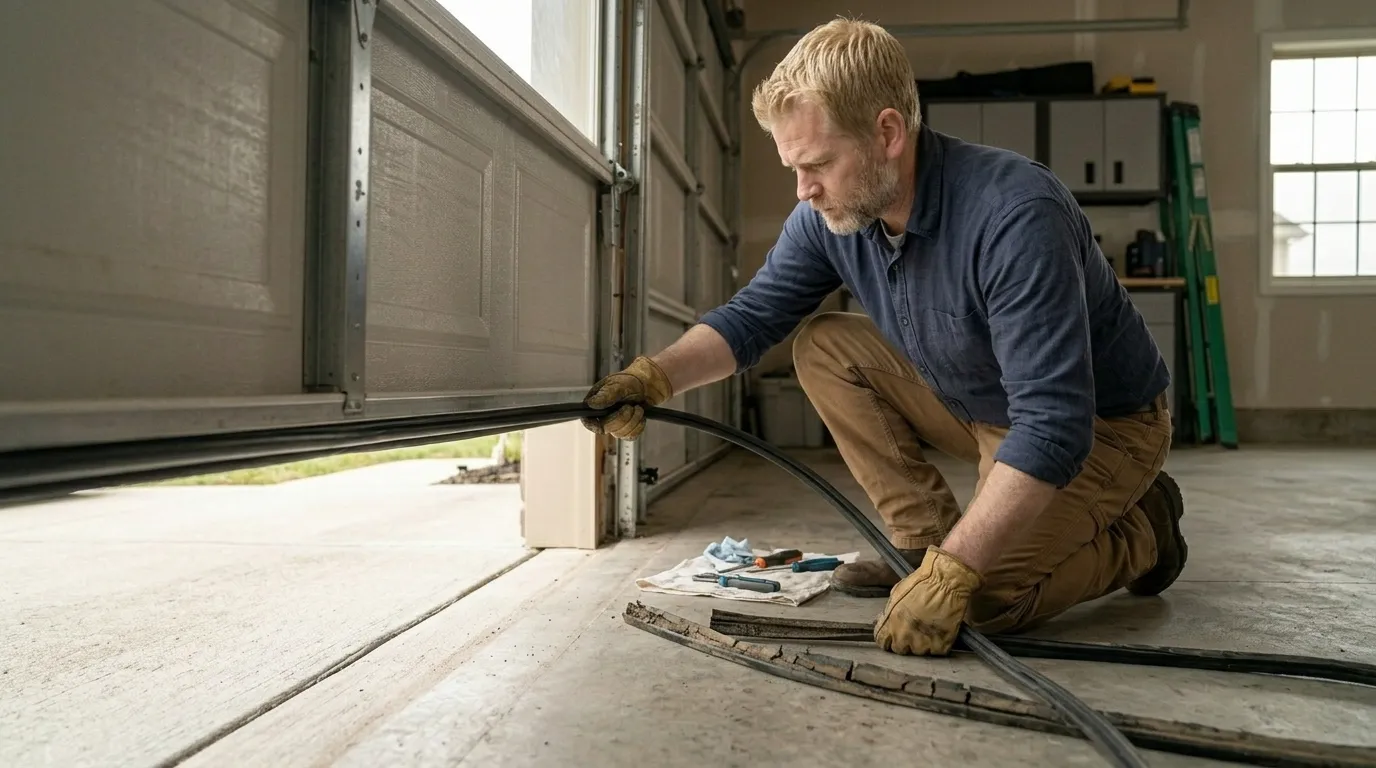
Most of Gardner went up around 2002, well past the 1977 median build year for the rest of our Overland Park service area. That gap matters more than it looks. A door built in that window still has its factory torsion spring, its original chain-drive opener, and the steel rollers that shipped with the house - and 20 years is about where that hardware starts failing on its own, not from abuse. We carry torsion springs sized for the single and double-car doors common on early-2000s construction, extension spring kits for the handful of older detached garages that predate that build wave, steel and nylon rollers, lift cables, and openers that fit the bracket spacing used through that era. We don't stock guesses. If a part on the truck doesn't match what's on your track, we tell you before we touch anything, and we order what does - which sometimes means a second trip, and we'd rather say that now than pretend otherwise.
The service area sits in a cold-moderate climate band, and that swing between summer heat and winter cold is hard on steel hardware regardless of when the house was built. In Gardner specifically, the story is less about weather extremes and more about age catching up all at once - a wave of houses built within a few years of each other means a wave of springs, openers, and cables aging out within a few years of each other too. Torsion springs lose tension gradually until one cold morning they don't have enough left to lift the door, and the opener strains against it until the gears or the capacitor give out. Extension springs on the smaller number of older detached garages in the area corrode at the eyelet over time and let go without much warning. None of this is Gardner-specific bad luck - it's Gardner-specific timing, because so much of the stock here was built in the same handful of years.
A torsion spring under full tension can break a wrist or worse if you don't know the winding sequence, and we're not going to walk you through that over the phone. Where you can help yourself: check that the opener's safety sensors aren't blocked or misaligned (a blinking light on the motor unit usually means this), listen for grinding versus a dead silent motor (grinding is often a gear, silence is often a capacitor or the board), and check the manual release cord if the door won't budge with power on - sometimes it's just been left in manual mode. Anything involving the spring, the cable, or the torsion bar itself is not a fix to attempt with a ladder and a Saturday. That's not us protecting a job; it's the actual injury math on that hardware.
A door that won't lift, or lifts a few inches and stops, points to a torsion spring that's lost its tension - common right at that 20-year mark for the 2002-era stock that makes up most of Gardner. A door that opens but won't close, or reverses partway, usually traces to the opener's sensors or its logic board rather than the spring. A loud bang followed by the door refusing to move at all is almost always a broken spring, and it's often loud enough that neighbors hear it before you do. Cables that look frayed or a roller that's visibly off its track are worth a call before you use the door again, not after.
We come out from Overland Park, about 14 miles from Gardner, with the spring sizes, roller types, and opener parts that match the hardware most common on houses built in the early 2000s. On arrival we check the spring tension, the cable condition, the track alignment, and the opener's sensor and board function before we touch anything - a door that won't close is sometimes a five-minute sensor fix, not a new opener. If the fix is a spring replacement, we match the wire gauge and wind to what's already on the door rather than swapping in whatever's closest on the truck. If a part isn't something we carry for that specific setup, we say so and get it ordered rather than forcing a mismatch that fails again in a year.
We don't have a fixed number to quote here without seeing the door - spring size, opener model, and whether the track or cable also needs work all move the price. What we can tell you: Gardner's median household income runs about $92,579, close to the $90,982 median across the wider service area, and the roughly 8,175 households here are a much smaller slice of the 59,351 across the full area we cover. None of that sets your price, but it's the context for why this is a smaller, newer pocket of the map rather than one of the older, denser ones. We'll give you the number before we start the work, not after.
Because it's newer. Most of Gardner was built around 2002, while the wider service area's median build year is 1977. That means the factory spring, opener, and rollers on a Gardner door are hitting their 20-year wear point now, which is a different failure pattern than the older stock elsewhere in the coverage area.
No. We work out of Overland Park and drive out to Gardner, about 14 miles. We carry the parts that fit the hardware common on houses built in the early 2000s so most jobs finish in one visit, but there's no local depot here.
Usually a dead capacitor or a failed logic board rather than the motor itself, especially on openers original to a house built in the early 2000s. Check that it's getting power first. If it is and there's still no sound at all, that's a board or capacitor call, not a spring problem.
Depends what's failed. A bad capacitor or sensor is a cheap fix on an otherwise sound unit. A motor or gear failure on hardware already near 20 years old is often not worth chasing part by part - we'll tell you which situation you're in once we've looked at it.
Call now or request a free quote - same-day service on most repairs, upfront written pricing.