Overland Park, KS · Garage Door Service
Cable repair for the 1960s-70s housing stock across Overland Park's service area, from Leawood to Spring Hill. Same-day diagnosis, straight talk on drums vs. cables.
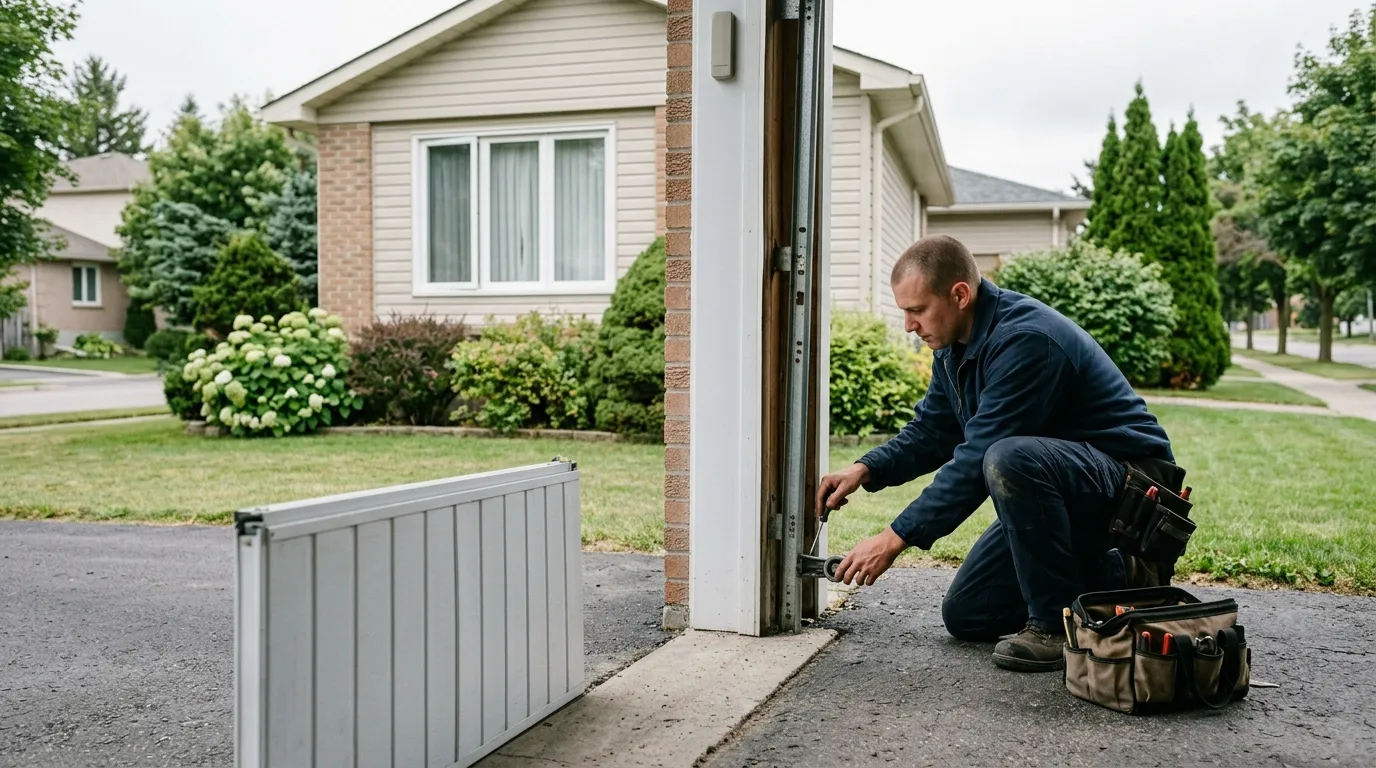
A single snapped cable on a standard double door is usually a same-visit fix once we're on site - cutting a new length to match the drum, re-tensioning the spring system, and running the door through a dozen cycles to check tracking. Two hours covers most jobs. Where it stretches is when a cable has been frayed for a while and has already chewed into the drum or worn a groove in the track roller bracket; then we're replacing parts, not just cable, and that's closer to half a day with parts on the truck. Houses in this area built in the 1960s and 70s (per F2) often still carry the original galvanized aircraft cable, which is thinner gauge than what gets installed today, so matching it sometimes means we carry more than one spool. If a cable has jumped the drum and jammed the opener gear, expect the job to run long regardless of the house - that's a mechanical unwind, not a swap.
The door hangs crooked on one side, or it drops a few inches and stops cold partway up. Sometimes you hear a bang first - that's the cable letting go under tension, usually while the door is closing and the spring is loaded. On older torsion setups common to this area's 1950-2004 housing stock, the cable can also just fray silently for months, showing as thin wire strands poking out near the bottom bracket, until the last strand gives. If only one side let go, the door will look like it's hanging by one corner. If both cables are gone at once, the door won't move at all and you should not force the opener - that's how a spring lets go too.
Cable failure tracks pretty closely with the age of the house. A big share of homes in this service area went up between the 1960s and 70s, with the broader range running 1950 to 2004 and a median build year around 1977. That means a lot of original hardware is still doing the job it was installed to do decades ago - cables, drums, and bottom brackets that have never been swapped. Galvanized coating on older cable wears thin at the drum contact point long before the cable looks bad to the eye. Add the cold-moderate winter swings this area sees: metal cable contracts in hard cold, which adds load right at the point where it's already thinnest from years of drum wear. That's a bad combination - old wire, tight tolerance, and a cold snap that pulls it taut one more time than it can take. Newer doors installed after a full teardown tend to have cable rated for higher cycles, which is part of why failures cluster in the older pockets of this service area rather than showing up evenly.
Don't. A garage door cable works against a loaded torsion or extension spring, and the spring is what actually moves the door - the cable just guides it. Cut or unhook a cable with the spring still wound and it can whip hard enough to break a bone or put a dent in a car hood. If you're comfortable and mechanically confident, the one thing a homeowner can safely do is disconnect the opener arm and try to lift the door by hand slowly, just to confirm it's the cable and not something else jammed in the track - if it won't budge or feels heavy on one side, stop and call it in. We won't talk you through winding a spring over the phone. It's not a liability line, it's just not a job that forgives a mistake.
No, and telling them apart matters. A broken spring usually means the door won't lift at all and feels dead heavy. A broken cable often lets one side of the door drop or hang crooked while the other side stays up, because the second cable is still holding. Either way, the door is under spring tension and isn't safe to force by hand or by opener.
You can, but we usually recommend replacing both, especially on older doors common across this service area's 1960s-70s stock. If one cable failed from age and wear, the other one is the same age and has seen the same cycles - it's usually a matter of months before it goes too, and that's a second service call for the same door.
Cold doesn't cause the wear, but it can be the thing that finishes off a cable that was already frayed. Metal contracts and tightens slightly in a hard cold stretch, which adds a bit more load right at the point on the drum where the cable is thinnest. That's often when an old, worn cable finally lets go.
By Neighborhood
We also handle cable repair in these Overland Park-area suburbs.
Call now or request a free quote - same-day service on most repairs, upfront written pricing.