Overland Park, KS · Garage Door Service
Broken spring, off-track panel, or dead opener in Overland Park. We explain what's failing, why it's common in this area's housing stock, and what to expect before you call.
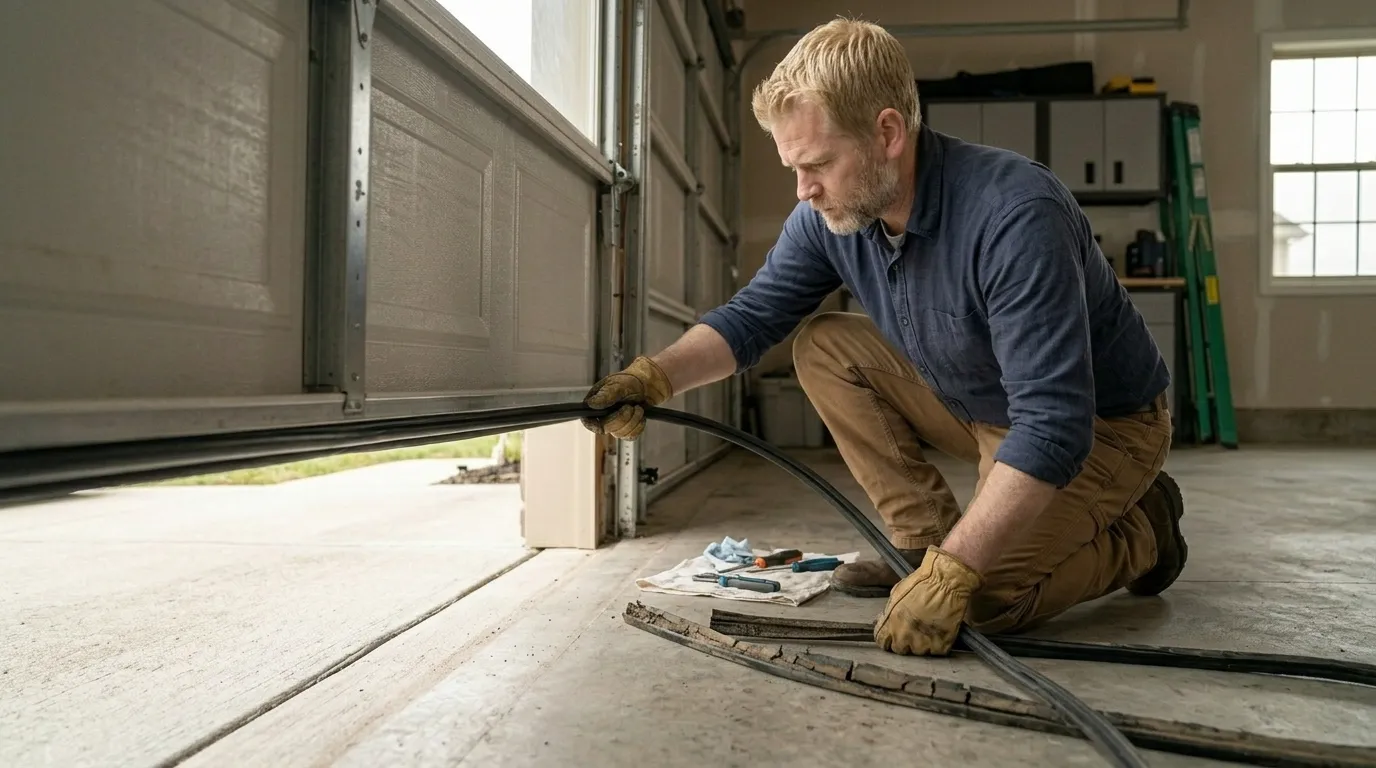
There's no single number we can give you here, because it depends on what's actually broken and what parts the job needs. A snapped torsion spring is usually a same-visit fix if the size and cable drum match what's already on the door. A bent track, a burned-out opener board, or a section that's cracked from age can mean a second trip if a part has to come in.
What we can tell you honestly: we don't quote a fixed turnaround on the phone before we've seen the door. Anyone who does is guessing. What changes the timeline most in this area is the age of the equipment. A door installed when this stretch of Overland Park's housing was built - the median year across the service area is 1977 - often uses spring sizes and opener mounts that newer stock doesn't carry, so matching parts can take longer than it would on a house built last year.
If your door won't move at all and it's blocking a car in or out, say so when you call. That changes how we schedule the visit, not how fast the part itself becomes available.
Most calls fall into a handful of patterns. The door won't open and you hear a hum from the opener but no movement - that's often a spring that's already broken, not the opener failing. The door opens partway and reverses or slams - that can be a cable off the drum or a roller that's jumped the track. A door that's fine one day and stiff the next, especially after a stretch of very cold mornings, points to hardware that's tightening up as it ages, which is common on the older end of this area's housing stock (much of it dating to the 1960s and 70s).
A visibly bent track or a panel with a fresh dent usually means something hit the door - a car bumper, a basketball, wind-driven debris - and the fix is mechanical, not electrical. If the opener light blinks in a pattern and the door won't respond to the remote, that's the board reporting a fault code, and it's worth checking before assuming the whole opener needs to be replaced.
What we can't do over the phone is tell you which of these it is for certain. A description helps us bring the right parts, but the spring gauge, the track alignment, and the opener logic board all need eyes on them.
Overland Park's housing spans 1950 through the early 2000s, with a lot of it concentrated in the 1960s and 70s across the fifteen-plus named areas we cover. That range matters for garage doors specifically: older houses in this range were built with torsion spring setups and door gauges that were standard decades ago but aren't what's stocked as a default part today, which is part of why matching hardware takes an extra step on some of these jobs.
The climate here is cold-moderate, and that's the other half of the story. Steel contracts in cold weather, and the lubricant on rollers and hinges thickens, so doors that move fine in October can bind or drag once the temperature drops - and a spring that's already fatigued from age is more likely to give out under that added resistance rather than easing into failure. This isn't a Overland Park-specific weather event; it's the ordinary seasonal swing this climate band sees every year, landing on a lot of aging spring hardware at once.
With 59,351 households across the service area and roughly 35,227 owner-occupied houses, most doors here are part of a house, not a rental unit swapped out on a schedule - which means original hardware tends to stay in place longer before anyone thinks to replace it ahead of a failure.
A torsion spring is under real tension and it's not a repair we'd tell anyone to do themselves - that's the honest limit here, no matter how capable you are with tools. Cables, drums, and the spring itself can cause serious injury if the tension isn't released correctly, and we won't write around that.
Things you can safely check yourself: whether the opener is getting power, whether the track has visible dirt or debris, whether the remote batteries are dead, and whether the manual release cord has been pulled (that disconnects the opener from the door entirely and is a common reason a door "won't respond" when it's actually just been unlatched). Tightening loose bolts on hinges or brackets is also reasonable if they're accessible without removing the spring assembly.
Given the median household income across this service area is $90,982, replacement parts and a same-day call aren't usually the deciding factor in whether to repair versus replace - age and condition of the door itself matter more. A door from the older end of the 1950-2004 range with a warped panel or rusted track may be a better candidate for full replacement than repeated patch repairs, and we'll say so if that's what we find.
No. We can't quote a fixed arrival window or repair time without knowing what's actually failed - a broken spring, a track issue, and an opener board fault all take different amounts of time. We'll ask what you're seeing and go from there.
Cold snaps are the usual culprit here. This area sits in a cold-moderate climate band, and contracting metal plus thickened lubricant puts extra load on hardware that's already aging - often enough to push a fatigued spring past its limit.
Depends on the door's condition, not just its age. A lot of houses here were built between 1950 and 2004, median 1977, so plenty of doors are original. If the panel's warped or the track's rusted through, replacement usually makes more sense than another patch repair.
No - that's the one place we won't offer shortcuts. A torsion spring under tension can cause serious injury if handled without the right bars and technique. Leave that part to a visit; the rest of the door is fair game to check yourself.
By Neighborhood
We also handle emergency garage door in these Overland Park-area suburbs.
Call now or request a free quote - same-day service on most repairs, upfront written pricing.