Overland Park, KS · Garage Door Service
Broken torsion spring in Gardner, KS? Overland Park Garage Door Pros drives 14 miles out to fix springs on the area's early-2000s builder-grade garage doors.
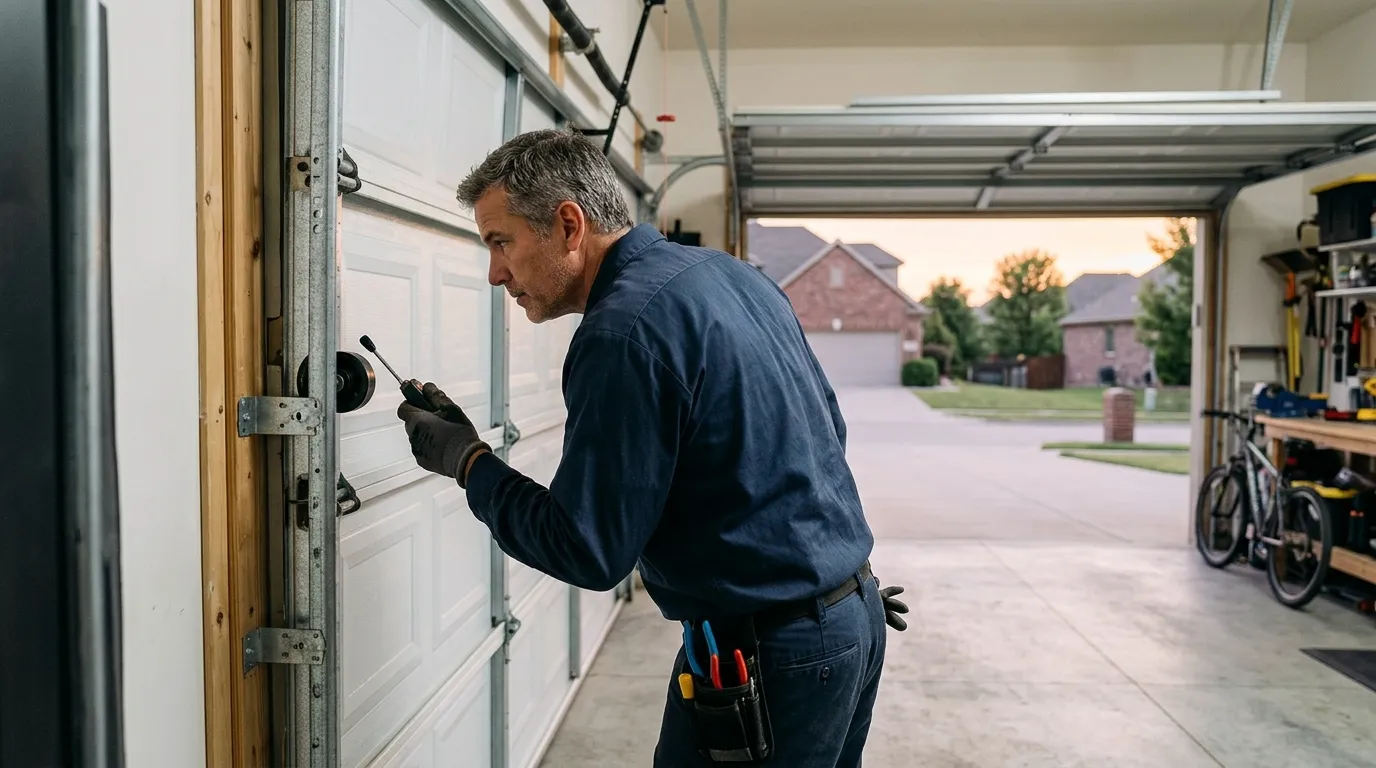
The drive out to Gardner runs about 14 miles from our shop in Overland Park, and that distance shapes how we stock the truck before we ever pull out of the lot. Because most of Gardner went up around 2002, we're loading torsion springs sized for the standard 2-inch and 2-inch high-cycle shafts that builders ran through the early 2000s boom - not the older side-mount hardware you'd find on a 1960s house. We carry matched pairs in the common .234 and .250 wire sizes that fit those builder-installed torsion systems, plus the safety cables and end bearing plates that wear alongside them. What we don't load up on is a wide spread of oddball extension spring kits, since extension setups are rare on doors from this build era - most Gardner garages went straight to torsion from the start. If a job turns up something outside that range, we'll say so on site rather than guess at a fit from the driveway.
A torsion spring is rated for a set number of open-close cycles, usually somewhere around 10,000, and it doesn't care how new the house is. Gardner's housing stock centers on a median build year of 2002, which means a lot of these doors are now twenty-plus years into that cycle count, and the original builder-grade springs are simply running out of life at the same time across whole streets. That's different from the broader Overland Park service area, where the median build year sits closer to 1977 and much of the stock dates from the 1960s and 70s - older hardware, different failure pattern, different fix. Add in the cold-moderate climate swings this region gets, and steel that's already near the end of its rated cycles tends to snap on the first hard cold morning rather than wear out gradually. We see it most on doors that get opened and closed several times a day - households with more people coming and going put more cycles on the same spring in less time.
A torsion spring under load holds enough stored energy to break a hand or worse, and that doesn't change based on how new the door is. If you're comfortable with wrenches and have watched it done, an extension spring on some doors is a smaller job - but the torsion springs common on Gardner's early-2000s builder doors need a winding bar, a properly sized socket, and the shaft locked down before you touch a set screw. We'll talk you through what's involved on the phone if you want to know, but we won't recommend doing this one alone. Where DIY does make sense is the easy stuff: lubricating rollers and hinges, checking the track for a bent spot, or tightening a loose bracket. Save the wrench work on the spring itself for someone standing there with the right bar in hand.
The door won't budge past six inches, or it slams down instead of lowering on its own weight - that's a broken torsion spring, plain and simple, and it's the single most common call we get from this side of the service area. Sometimes it's less dramatic: the opener strains and groans but the door still moves, which usually means one spring on a double-spring setup has gone while the other is still holding partial weight. You might also hear a loud bang from the garage with no obvious cause - that's the spring letting go, often overnight when the temperature drops. If the door looks crooked in the opening, hanging lower on one side, that's a spring problem too, not a track problem, even though it looks like one.
We come out, unload the shaft, and pull the broken spring off the winding cone. On the builder-grade torsion doors common in Gardner, we replace both springs as a matched pair even if only one broke, since the surviving spring is almost always close behind on its cycle count and a mismatched pair puts uneven load on the shaft. We check the bearing plates, the center bracket, and the cable drums while the shaft is exposed, since a spring failure is often the first sign that other hardware near it is due. Then we wind to the door's actual weight, not a chart number, and run it through a full cycle before we call the job done. One honest limit: if the shaft itself is bent or the drums are cracked, that's a bigger repair than a spring swap, and we'll tell you that on site rather than patch around it.
We don't have a set price to quote sight unseen, since spring size, whether one or both need replacing, and any bearing or cable wear all move the number. What we can say is that the trip itself - 14 miles from Overland Park - doesn't change what you pay; we price the repair, not the drive. If you want a number before we're on site, tell us the door's rough age, the number of springs it runs, and whether it's still moving at all, and we can narrow it down over the phone.
Age of the house isn't what wears out a spring - cycle count is. A torsion spring is rated for roughly 10,000 open-close cycles, and a door installed when the house was built in 2002 has likely used up that count by now regardless of how new everything else looks.
No, we run out of Overland Park, about 14 miles away. That doesn't change how the repair itself goes - we bring the same spring stock and tools on every call, we just cover the drive as part of getting the job scheduled.
Not always, but often. If your door runs on a double-spring torsion system and one has broken, the other is usually close behind on cycle count. We'll check the actual wear on both before recommending a pair replacement rather than assuming.
A wound torsion spring holds enough stored force to cause a serious injury, and the sizing on Gardner's common builder-grade doors needs the right winding bar and socket. We'll walk you through safe DIY tasks like lubrication, but not the spring swap itself.
Call now or request a free quote - same-day service on most repairs, upfront written pricing.