Overland Park, KS · Garage Door Service
Leawood homes run newer than most of the service area - median build year 1989 versus 1977 overall. That gap changes which cable and drum combo failed. We drive the 4 miles from Overland Park to fix it.
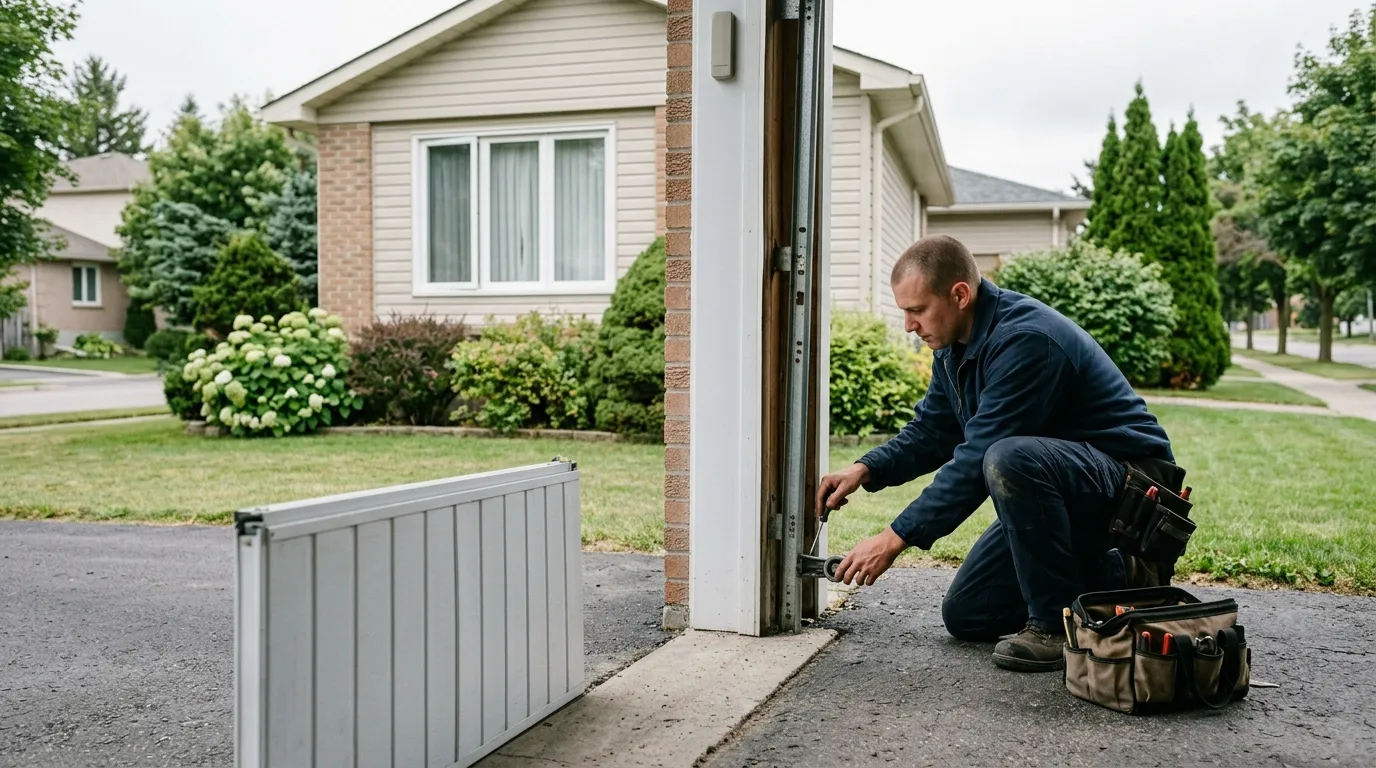
Leawood's median home dates to 1989, a good decade past the 1977 median for the rest of the area we cover. That later build year matters more than it sounds like it should. Homes from this stretch mostly shipped with steel torsion springs and galvanized lift cables run over aluminum or steel drums, not the older galvanized-over-braided cable you still find on the 1960s stock elsewhere in our territory. We carry replacement 1/8-inch and 3/32-inch galvanized aircraft cable in the lengths that match standard 7-foot and 8-foot door heights, plus the drums and safety cables for extension-spring setups that showed up on some of the split-level and ranch construction from that era. What we don't stock on the truck is anything sized for a door outside those standard heights - a handful of custom-height doors in this price bracket exist, and if we hit one, the cable itself may need to be cut to order. That's a return trip, not a same-visit fix, and we'll tell you on-site if that's what we're looking at.
A snapped cable on a standard torsion setup, both cables replaced as a set, usually runs under two hours once the truck is on-site - and the truck is coming from Overland Park, about 4 miles out, so travel isn't the bottleneck here. Extension-cable jobs with worn pulleys or a bent track from the cable jumping the drum take longer, closer to two and a half hours, because we're inspecting the track and pulley bracket before we call it done. We always replace cables in pairs even if only one broke. A cable that snapped from age means its twin is the same age and close behind it, and coming back out for the second failure costs you more than doing both now.
Leawood's housing stock being newer works against a common assumption - that newer means the cable has more life left. Age isn't the only driver of failure. The area sits in a cold-moderate climate band, and cable failure here tracks more with cycle count and rust at the drum groove than with sheer years on the house. A door used several times a day for over a decade, torsion or extension, wears the cable at the same contact points on the drum until a frayed strand lets go, usually without warning and usually at the bottom of a lift when tension is highest. Winter cold makes the galvanized coating more brittle at the fray point, so failures cluster in the colder months even on a cable that looked fine in fall. Off-track doors and cables that jumped a drum groove after an impact are the other common call - a car bumper, a bike, a basketball. Neither cause has much to do with the specific age of the house.
We back the door down carefully with the springs still under load, release tension, and pull both cables off the drums to inspect the drum grooves, the bottom brackets, and the track alignment before anything gets replaced. If the drum groove is worn or rusted through where the old cable rode, we replace the drum, not just the cable - reusing a grooved drum just re-cuts the new cable in the same spot within a season. Both cables go on as a matched pair, tensioned evenly, and we run the door a dozen cycles by hand and by opener before we call the job closed. If the springs themselves are original to a 1980s install and showing rust pitting at the coils, we'll flag that separately rather than bundle an unrelated repair into the cable job without asking first.
House age and cable age aren't the same clock. Cable failure tracks cycle count and rust at the drum groove, not the year the house went up. A door opened several times a day for 10-15 years wears through a cable regardless of when the walls were framed.
Both. Some of the ranch and split-level construction from this area's building years used extension springs with a separate safety cable, and we carry that hardware along with standard torsion cable and drums in the common lengths.
We're based in Overland Park, about 4 miles from Leawood. That's a short drive, not a separate branch or depot here - the job itself, once we're on-site, is what takes the time.
Both, as a set. If one cable snapped from wear, its twin has the same cycle count and the same age and is close behind it. Replacing only one means a second service call in the near future for a job that should've been done once.
Call now or request a free quote - same-day service on most repairs, upfront written pricing.