Overland Park, KS · Garage Door Service
Garage door repair for Leawood homeowners, covered from Overland Park 4 miles away. Torsion springs, steel doors, and openers built for this area's 1989-era housing stock.
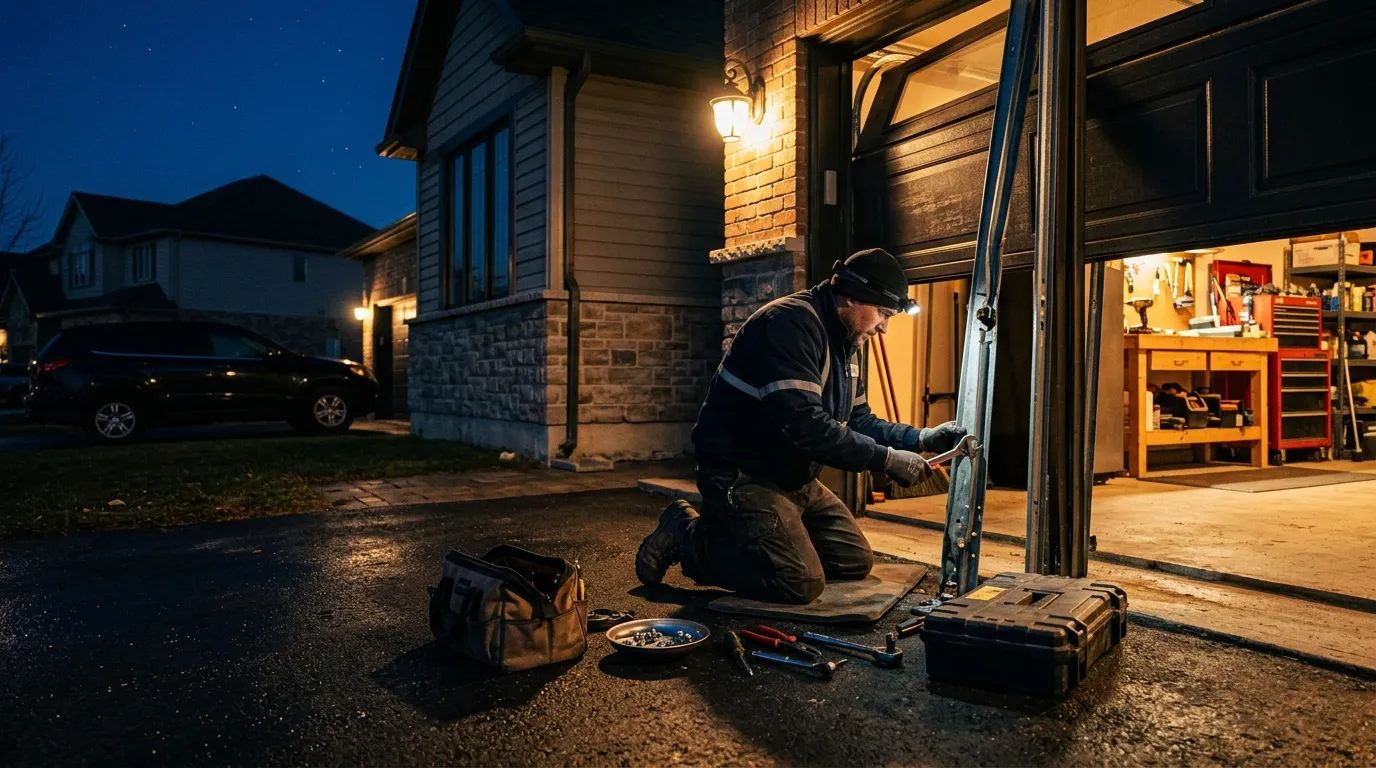
The drive out to Leawood from Overland Park is short, about four miles, so the truck that shows up already carries what most jobs here need instead of turning around for a second trip. Leawood's housing stock centers on a median build year of 1989, a full decade or more newer than the 1960s-70s stock that makes up most of the wider service area, so the doors we're pulling parts for out here are steel panel models on torsion spring systems, not the older extension-spring setups common in the older pockets we cover. We carry torsion springs sized for those steel doors, insulated steel panel sections, opener gear kits and circuit boards for the chain and belt drives that came standard through the 90s, and nylon rollers to match. With median household income here running near $184,976, more of what we install is insulated rather than the bare single-layer doors we swap elsewhere. One honest limit: a handful of door models from that late-80s run are out of production, so if a panel is cracked or badly dented we may not be able to match it exactly, and a full door replacement ends up being the straighter path than a patch.
We start by watching the door run, not just listening to what the homeowner heard. A door that won't open reads differently depending on whether the spring let go, the cable jumped the drum, or the opener's gears stripped, and a steel torsion-spring door on a 1989-era track behaves differently under load than an older extension-spring setup. We check the springs are the right wind and gauge for the door weight before swapping, because the wrong spring on a steel panel door either won't lift it or will wear the opener out fast trying. Once the new part is in, we balance the door by hand off the opener, then reconnect and run it a few times to check the travel limits and force settings before we call it done. If the opener's logic board is dead rather than the motor, we replace the board rather than the whole unit when that's an option. The one limitation we're upfront about: if the door itself has taken enough damage that the frame or track is bent along with the panel, we'll tell you replacement is the better spend rather than stacking repair costs onto a door that's already compromised.
At four miles, the drive from Overland Park doesn't add much to how a call here runs. That distance matters less for how fast we can turn a job around and more for what we bring the first time: because Leawood sits at the newer end of the service area's housing stock, median year built 1989, we know before we arrive that we're more likely dealing with a steel torsion-spring door than an older extension-spring setup, and we stock the truck accordingly. A straightforward spring replacement or cable swap is usually a same-visit job once we're on site. Openers with a stripped gear or dead board also typically get sorted in one trip. What stretches a job past one visit is usually a part we don't carry, like a section for a discontinued panel design, which sometimes has to be special-ordered. We don't promise a fixed number of hours here, because a door that's been limping along for months sometimes reveals a second problem once the panel comes off the track, but most of what we see in a neighborhood built around 1989 is straightforward hardware work, not a hunt for parts nobody makes anymore.
With a median build year of 1989, Leawood's garage doors are mostly steel panel doors on torsion springs, not the wood or older single-layer doors we see in the service area's 1960s-70s pockets. Those original torsion springs are now more than three decades old on the earliest houses in that range, well past a typical service life, and a spring that snaps without warning is the single most common call we get out here. The cold winters that come with this region work into the weatherstripping and seals on doors from that era, so a door that ran fine every fall for years suddenly starts binding or dragging once temperatures drop. Openers installed alongside those late-80s and 90s doors are also aging into gear and circuit-board failure territory, especially chain-drive units whose plastic gears wear down after years of regular cycling. A smaller number of calls come from nylon rollers original to the build finally cracking after enough winters of contraction and expansion. What we don't see much of here is the older extension-spring hardware that's common in the 1960s-70s stock elsewhere in the territory, since Leawood's homes largely postdate that hardware generation.
No, we run out of Overland Park and drive the roughly four miles into Leawood for calls. It's a short enough trip that it doesn't change how a job gets stocked or scheduled, but we don't have a local depot or drop-off point in Leawood itself.
Torsion springs on steel doors, which is most of what's in Leawood given the neighborhood's 1989 median build year, have a cycle-count life span. A spring that's been fine for decades doesn't send a signal before it goes, it just lets go on one lift or close.
Depends what failed. A stripped plastic gear or a bad circuit board on a chain or belt drive from the late 80s or 90s is usually a straightforward part swap. If the motor itself has burned out, replacement is often the better spend than chasing parts for a discontinued unit.
Sometimes not. Some door models built around 1989 are out of production, so if a section is cracked or dented we can't always source an identical replacement panel. In that case we'll tell you straight whether a full door replacement makes more sense than patching.
Call now or request a free quote - same-day service on most repairs, upfront written pricing.