Overland Park, KS · Garage Door Service
Most Leawood garage doors date to the late 1980s build wave. We explain what's still original on those tracks, why they jump rail, and how we fix it fast from Overland Park.
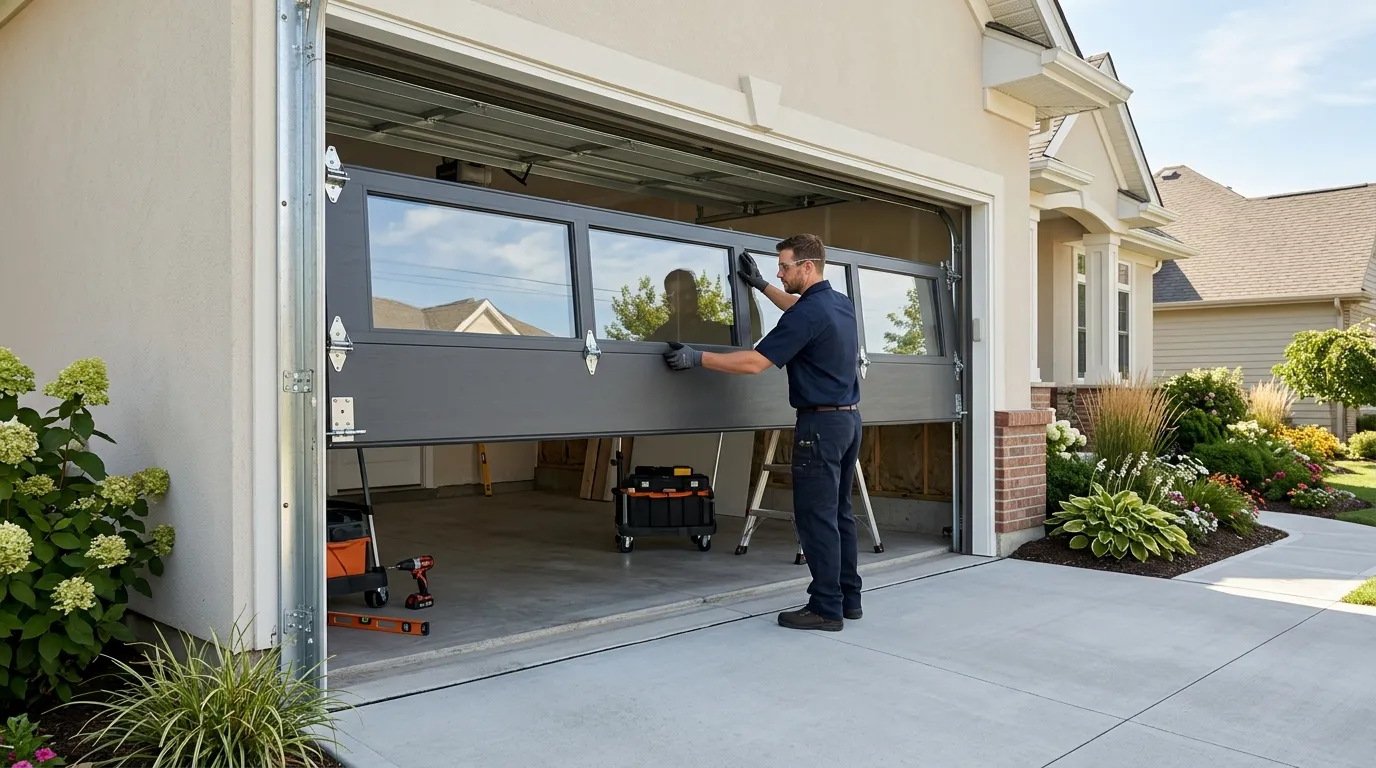
A lot of what comes off track in Leawood is original to the house. The area built up mostly around 1989, and a door installed then still runs on the horizontal track, roller, and hinge hardware it left the factory with - nobody swaps track brackets unless something forces the issue. We carry standard 2-inch and 3-inch track sections, both flag and center-mount roller brackets, and steel and nylon rollers to match late-80s spacing, since that era used a slightly different bracket gauge than newer builds. We also stock top and bottom roller brackets, hinges in the common gauges, and the lag screws and carriage bolts that strip out of jamb wood after three-plus decades of vibration. What we don't carry on the truck: obsolete aluminum track from a handful of odd builder-grade doors we still run into occasionally in this vintage. If a job needs that, we tell you up front rather than force a mismatch, and we source it before we schedule the repair.
An off-track door with one bent roller bracket and no panel damage is usually a same-visit fix - track gets reset, bracket replaced, door rehung and balanced, done. Where it runs longer is when the door has come off both sides, which happens more with the older cable-drum setups still common on original 1989-era installs; those need the door supported, the track squared on both jambs, and the opener's travel limits reset afterward. We travel from Overland Park, about 4 miles to most of Leawood, so drive time isn't the bottleneck - diagnosis and whether the track itself is bent (versus just knocked loose) is. A bent track section gets replaced, not hammered straight; straightening looks fine for a week and then fails again.
Two things drive off-track calls in this area. First is age: hardware from a 1989 build has had thirty-plus years of thermal cycling in a cold-moderate climate, and the freeze-thaw swing loosens track bolts and jamb screws a little every winter until one hard slam or a gust catches the door mid-travel and pulls a bracket loose. Second is household habit - Leawood's median income runs well above the wider service area's, and higher-value homes here more often run heavier insulated doors on hardware sized for a lighter original panel, which puts extra load on aging brackets. We also see the ordinary cause: a car bumper clips the bottom section, or someone forces a door past an obstruction the sensor should have caught. None of that is unique to this suburb, but the age of the hardware taking the hit is.
First we check whether the track is bent or just pulled from the jamb - that decision drives everything else. If it's just pulled loose, we reset the door on the rollers, re-square the track against the jamb, and re-anchor with new lag hardware since the original holes are usually too worn to hold. If the track's bent, we cut in a new section rather than try to straighten steel that's already fatigued. Once the door's back on track, we run it through full travel by hand before touching the opener, checking for binding or a roller that's about to go next. Then we reset opener travel limits and force settings, since those drift once a door has been off its path. We don't recommend patching a track that's failed this way twice already on the same bracket points - at that stage the fix is a new track run, not another repair, and we'll say so rather than send you back out here in six months.
Yes, and it's the most common thing we find in Leawood. Track and roller hardware from that build era often outlasts everything else on the door if it's never taken an impact. It's usually fine until a bent bracket or a hard hit knocks it loose - that's when we get the call.
Most single-side off-track jobs with no bent track are a one-visit fix once we're on site. If the track itself is bent or the door came off both sides, we'll tell you during diagnosis whether we need a track section that isn't on the truck that day.
Usually it wasn't sudden - a bracket or jamb screw had been working loose for a while under normal use, and the cold-weather thermal cycling this area gets each winter finishes the job. One hard gust or a slammed close is often just the last straw, not the actual cause.
Call now or request a free quote - same-day service on most repairs, upfront written pricing.