Overland Park, KS · Garage Door Service
Emergency garage door repair for Mission Hills, KS homes built around 1953. Overland Park Garage Door Pros travels 10 miles to fix springs, cables, and openers.
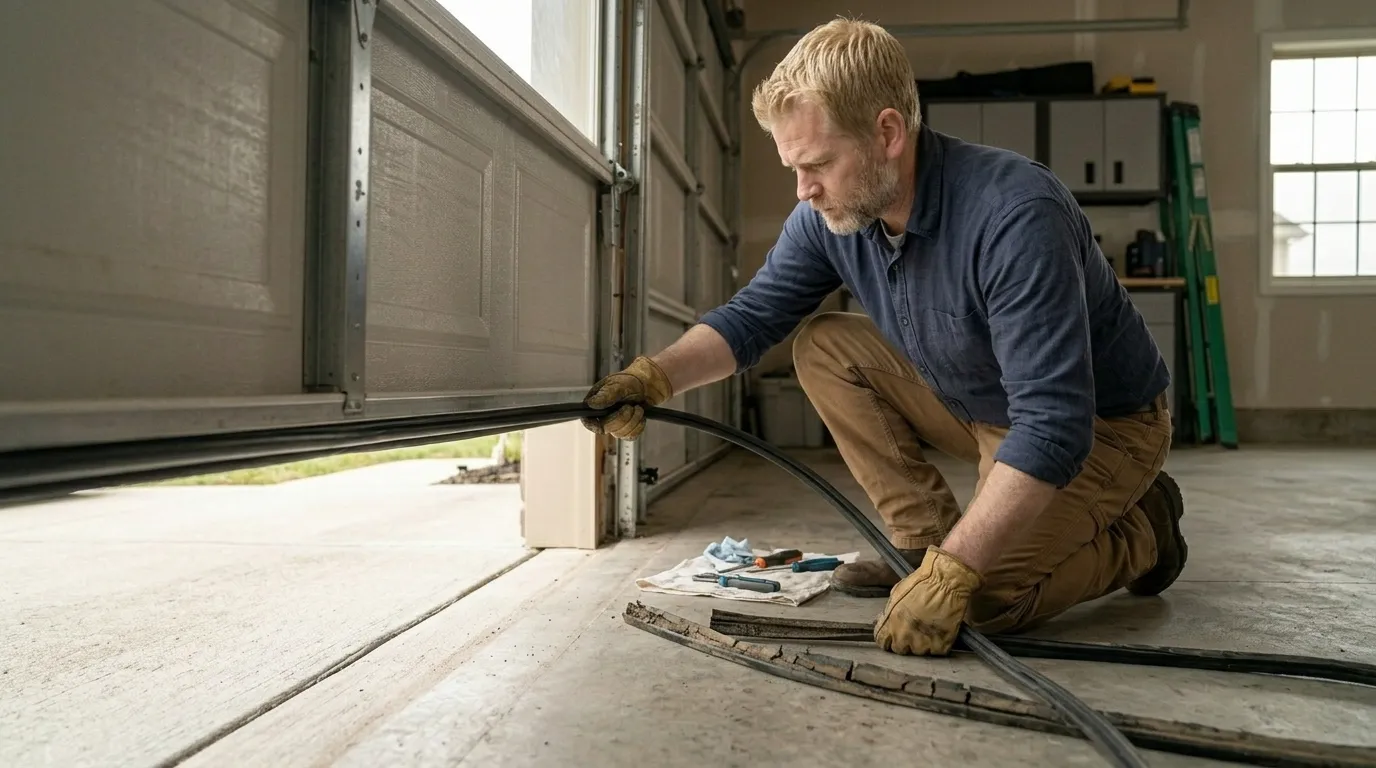
Mission Hills homes went up mostly around 1953, well before the newer construction that fills out much of the wider service area. That build year matters more than people think. A door installed in the early 1950s, or replaced once in the decades since on original track and jamb hardware, is running gear that nobody sizes the same way today. Torsion springs from that era were wound for heavier wood-panel doors, and if a homeowner swapped in a lighter steel door at some point without matching the spring, the door has been fighting its own hardware ever since. That mismatch shows up as a spring that snaps early, or a cable that frays because it's carrying more load-shift than it was built for. We also see jamb brackets that have been drilled and re-drilled through multiple hardware generations, which weakens the mounting point right where the cable drum needs it solid. None of this is unique to one house - it's a pattern tied to the era, not the address.
The failure that turns a simple spring job into a bigger one is usually the track, not the spring itself. On a house with 1953-era framing, the vertical track is often bolted to jamb wood that has shifted slightly over seventy years, so when a spring lets go and the door drops hard, it can rack the track out of plumb on one side. Fix the spring without checking the track alignment and the new spring wears unevenly within months. The other place this goes wrong is the drum-to-cable fit on older torsion setups - period drums sometimes take a cable diameter that current stock doesn't carry off the shelf, so we measure before we quote rather than after we've started the job. We travel from Overland Park, about 10 miles out, so we'd rather diagnose the whole assembly on the first trip than come back for a part we should have caught.
For a broken torsion spring, we match the wind and wire gauge to the door's actual weight rather than what a generic size chart suggests, because on a lot of these houses the door has already been changed once and the old spring was already the wrong size. We check track plumb before we tension anything, shim or re-set the jamb bracket if it's moved, and replace cables in pairs even if only one has frayed - a cable that's carried decades of uneven load rarely fails alone for long. If the opener has been added on since the original build, which is common on doors this age, we also check that the safety reversal and force settings are still within range, since older openers retrofitted onto older doors sometimes get set too aggressively to compensate for a heavy or stiff panel.
A homeowner can reset a sensor or tighten a loose roller bolt safely enough. What you should not do on a house this age is touch the torsion spring yourself - the winding cones on older hardware are under more stored force than most people expect, and if the drum or bracket underneath is worn from seventy years of use, it can let go while you're working on it. We also won't recommend replacing just the spring if the track is out of plumb; that's money spent on a fix that won't hold. If the door is original steel or wood from the 1950s and the panel itself is delaminating or the seams are separating, at some point repair stops making sense and replacement is the honest answer - we'll tell you when we see it, not sell you a spring you don't need.
We stock common torsion spring sizes, standard-gauge cable, rollers, and hinges on the truck for same-visit repair. What we don't always carry is a period-correct cable diameter or an odd drum size specific to older torsion assemblies still found on some 1953-era Mission Hills doors - when we hit that, we measure on site and order the exact part rather than force a near-fit that will wear out fast. That's a short delay on a small number of jobs, not the norm, but it's honest: better to wait a day for the right part than replace hardware that fails again in a year.
A lot of these homes date to around 1953, and doors or springs replaced once since then don't always match the original hardware sizing. A spring wound for a different door weight wears unevenly and fails sooner than one properly matched to the panel it's lifting.
We travel from Overland Park, about 10 miles away, to reach Mission Hills. We don't run a branch or depot in town - every job is dispatched from the Overland Park shop.
Yes. On houses from the early 1950s, jamb wood can shift slightly over the decades, which racks the vertical track. We check plumb and re-set the bracket before tensioning any new spring, since skipping that step just wears out the new part faster.
For most repairs, yes - common spring sizes, cable, rollers, and hinges are stocked. Some older torsion drums or cable diameters specific to 1950s-era hardware need to be ordered once we measure them on site.
Call now or request a free quote - same-day service on most repairs, upfront written pricing.