Overland Park, KS · Garage Door Service
Mission Hills homes date mostly to 1953, a decade ahead of most of the Overland Park service area. We travel in for the older hardware and oversized custom doors that come with it.
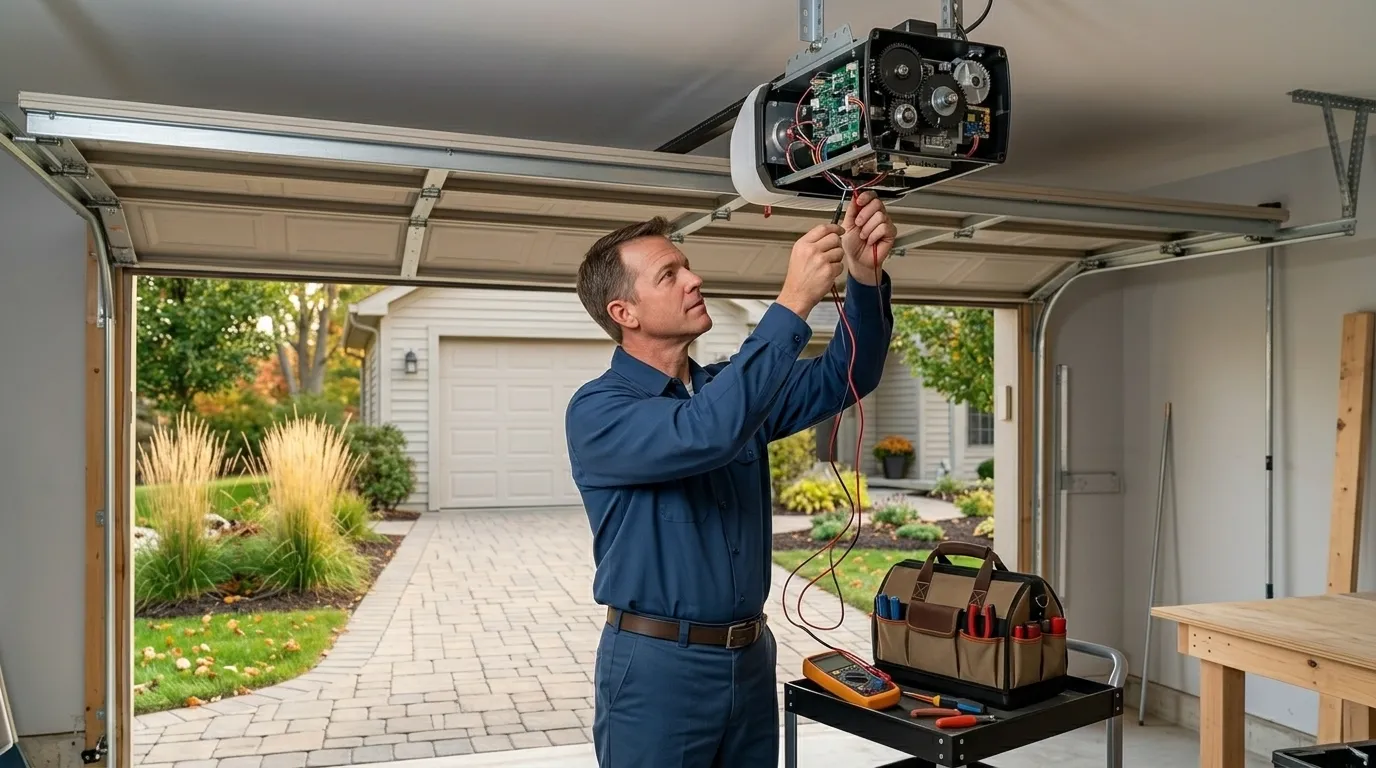
Most of the calls we take from Mission Hills trace back to one thing: the house is older than what we see across the rest of the area we cover. The median build year here is 1953, well ahead of the 1950-2004 range and 1977 median across the wider service area. That gap matters on a garage door. A house built in the early 1950s was framed before torsion spring setups became the standard fix on wide single doors, and a lot of these garages still carry hardware sized for a door that's since been swapped for something heavier - a custom wood-look or a wider two-car panel that the original track and spring were never rated for.
The other pattern we see is scale. Mission Hills sits inside a service area with a $90,982 median household income, but the homes here run well past that, with median income above $250,000. That buys bigger doors - taller, wider, sometimes double-skin insulated panels - hung on openers and springs that were specified for a lighter, older door decades back. When a homeowner upgrades the door but not the lift hardware underneath it, the spring works harder than it was built for, and it fails sooner than the warranty sticker suggests it should.
The mismatch between an older frame and a newer, heavier door is where jobs go wrong if you're not looking for it. A tech who shows up, sees a torsion spring, and swaps it for a same-size replacement without checking the door's actual weight is setting the next failure up in advance. On a 1953-era garage, the header and jamb were built to hold a lighter door than what's likely hanging there now, so a straight swap can leave the new spring under-rated for the door it has to lift every day.
Winters in this part of Kansas are cold enough that steel contracts and grease stiffens, which is a normal seasonal load on any door - but on hardware already working past its rating, that's the difference between a spring that lasts and one that snaps on a January morning. We don't guess on this. We weigh and measure the door in front of us before we quote a spring, not the door the original builder had in mind seventy years ago.
We come out from Overland Park, about 10 miles, and the first thing we do on an older Mission Hills door is check what's actually hanging in the opening - panel material, thickness, and whether it matches the torsion hardware installed. If someone upgraded the door at some point without upgrading the spring and shaft, we size the replacement to the door that's there now, not the one the house came with.
On openers, the same logic applies. A heavier insulated door needs a unit rated for that lift, not whatever unit happened to fit the bracket. We install to the door's actual weight and travel, check balance by hand before we call it done, and test the auto-reverse and force settings so the opener isn't straining against a door it can't quite handle. None of this requires tearing into the frame - it's a hardware match problem, and most of these jobs are done in one visit.
A torsion spring under load will put you in the hospital if it lets go while you're working on it, and that risk doesn't change because the house is nice or the door is old. If you're comfortable checking rollers, tightening loose hinge bolts, or lubricating tracks, that's fair game and it's worth doing twice a year regardless of the door's age.
What we'd tell a Mission Hills homeowner specifically: don't guess at spring size from a hardware store chart built for standard doors. A custom or oversized panel on a home this old often falls outside those charts entirely, and an under-rated spring will fail again within months, sometimes weeks. That's not us protecting a call - it's what actually happens when the math is wrong. If the door is original to the house or close to it, get the weight checked before anyone touches the spring.
We carry standard torsion springs, extension springs, rollers, cables, and hinges on the truck for most jobs. Where Mission Hills gets trickier is oversized or high-cycle springs sized for heavier custom doors - those aren't always a same-day part, and we'll say so on the spot rather than promise a fix we can't deliver that visit. Openers rated for heavier lift are usually a next-visit install once we've confirmed the door's actual weight.
We don't stock parts for every custom panel manufacturer, and on a house this age, some original hardware is long out of production. When that's the case, we replace with a modern equivalent that matches the door's weight and travel rather than hunting for an exact original part that doesn't exist anymore. That's the honest tradeoff on an older, high-end door: function over factory-original.
Usually it's a size mismatch. The house dates to around 1953, and if the door's been upgraded to something heavier since, the original torsion spring size may still be installed. A spring rated for the wrong weight fails faster, especially once winter cold stiffens the hardware. We check actual door weight before recommending a spring size.
No. We're based in Overland Park and travel to Mission Hills, about 10 miles away, for service calls. There's no local depot here - just a truck that comes out for the job.
Not without checking. If your door was ever upgraded to a heavier custom or oversized panel, the spring currently installed may already be undersized for it, which is often why it failed. We measure the door's actual weight before matching a replacement.
Standard torsion springs, rollers, and cables are usually on the truck for a same-day fix. Oversized springs and openers sized for heavier custom doors aren't always in stock and may need a second visit - we'll tell you upfront if that's the case.
Call now or request a free quote - same-day service on most repairs, upfront written pricing.