Overland Park, KS · Garage Door Service
Mission homes mostly date to 1973, a decade before much of Overland Park's stock. We drive 10 miles out to work on the torsion springs and openers that era left behind.
We're based in Overland Park, about 10 miles from Mission, so figure that drive into any job you book. Once a truck is on-site, most spring and opener repairs run under two hours. Full door replacements take longer, mostly because of measuring, removing the old track, and squaring up the new jambs - older Mission houses weren't always framed to today's standard opening widths.
The bigger time factor is usually parts, not labor. Mission's housing stock centers on 1973, a good four years earlier than the broader service area's 1977 median. That earlier build year means more original hardware still in place: older torsion spring cones, different drum sizes, sometimes a track profile that newer rollers don't fit cleanly. When a part matches what's on the truck, we're done same visit. When it doesn't, we order it and come back - we won't force a mismatched roller onto an old track just to finish faster.
Winter adds its own delay. In a cold-moderate climate, hardened grease and stiff cables slow down diagnosis a little, since a door that's merely cold-sluggish can look like a bigger problem than it is until it's warmed up and cycled a few times.
Because Mission's houses skew a few years older than much of the rest of the area, we stock the torsion springs and drum sizes that turn up in 1973-vintage openings more often than we do the newest opener boards. Standard 1-3/4 inch springs, older-style extension spring safety cables, and the mid-size roller and hinge sets that fit a 1970s track are all on the truck by default.
What we don't carry as routine stock is anything discontinued outright - some original hardware from this era simply isn't made anymore, and if a job needs it, that's a special order, not a same-day fix. We'll tell you straight if that's the case rather than jury-rig a fix that won't hold.
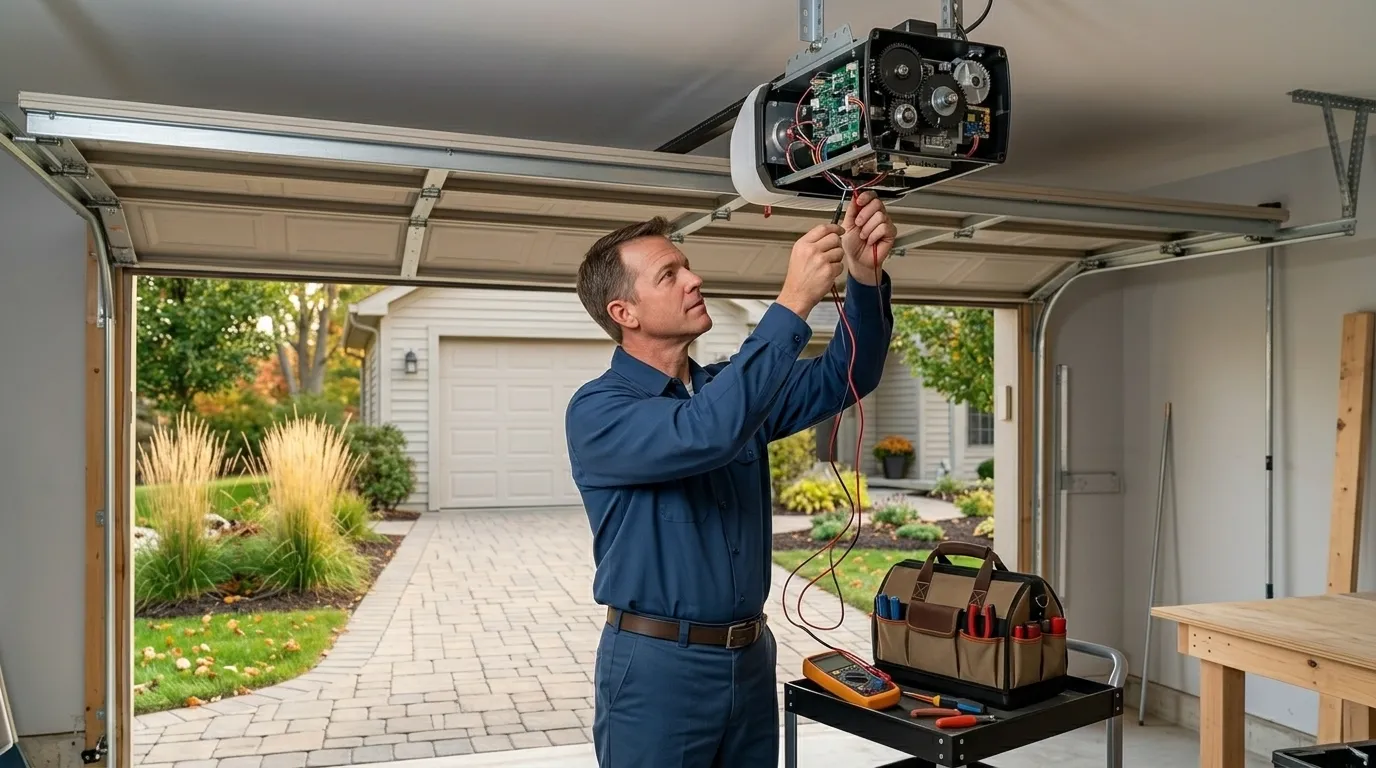
Openers are a mixed bag here too. A lot of Mission garages have been retrofit with newer opener units even though the door and track are original, so we bring both older drive-gear parts and current opener boards, since we usually don't know which one we're facing until we're standing in the garage.
We don't have a published price list to hand you here, and job cost depends on what's actually broken and what part it takes - a spring swap and a full door replacement aren't in the same ballpark. What we can tell you is what shapes the number in Mission specifically: median household income in this area runs $74,396, noticeably below the broader service area's $90,982, and across roughly 5,258 households here, replacement jobs tend to lean toward practical, mid-grade doors rather than premium upgrades.
That's not a knock on the neighborhood - it's just the market we see. If your door is a straightforward torsion spring failure on an otherwise sound 1970s-era door, repair usually makes more financial sense than replacement. If the panels are rusted through or the track is bent beyond squaring, replacement is the honest answer even though it costs more up front.
Torsion springs are under real tension and they're not a weekend project - that part's true everywhere and Mission is no exception. Where local age matters is the older hardware itself: a 1973-era torsion setup often uses a winding cone and shaft configuration that doesn't match the tools or spring winding bars sold today, so even homeowners comfortable with tools can find themselves working with hardware nobody sells instructions for anymore.
Roller and hinge swaps on an older track are more forgiving, and plenty of Mission homeowners handle basic lubrication and tightening loose hardware themselves. Where we draw the line is anything involving the spring, the cable, or resetting opener travel limits on a door with unknown hardware history - we'd rather get a call than a trip to the ER.
Most garage door calls in Mission trace back to age, not accident. With a median build year of 1973, a lot of these doors have carried the same torsion spring and drum setup for decades, and metal fatigue doesn't announce itself - it just lets go one cold morning. The cold-moderate climate here means winter temperature swings work springs and cables harder than a mild-climate town would, since steel contracts and grease stiffens right when the door gets used most.
We also see openers original to the house paired with tracks that have shifted slightly out of alignment over 50 years of settling - common in a neighborhood this age, less common in newer subdivisions closer to the edge of the service area.
No. We're based in Overland Park, about 10 miles away, and travel out to Mission for jobs. There's no local branch or depot here - every visit starts with that drive, which is worth knowing when you're scheduling.
Mission's housing largely dates to the early 1970s, and torsion spring sizing, drum diameter, and cone style changed over the decades. A door built in 1973 often needs a different spring than one installed in the last 10 years, even on a similarly sized opening.
Often yes, if the panels and track are sound and it's just a spring or cable failure. If the door has rust-through, bent track, or an opener that's failed repeatedly, replacement usually costs less over time than repeated repairs.
Call now or request a free quote - same-day service on most repairs, upfront written pricing.