Overland Park, KS · Garage Door Service
Mission's garage doors mostly went up in the early 1970s on narrower steel track. We drive out from Overland Park to fix off-track doors built for that era.
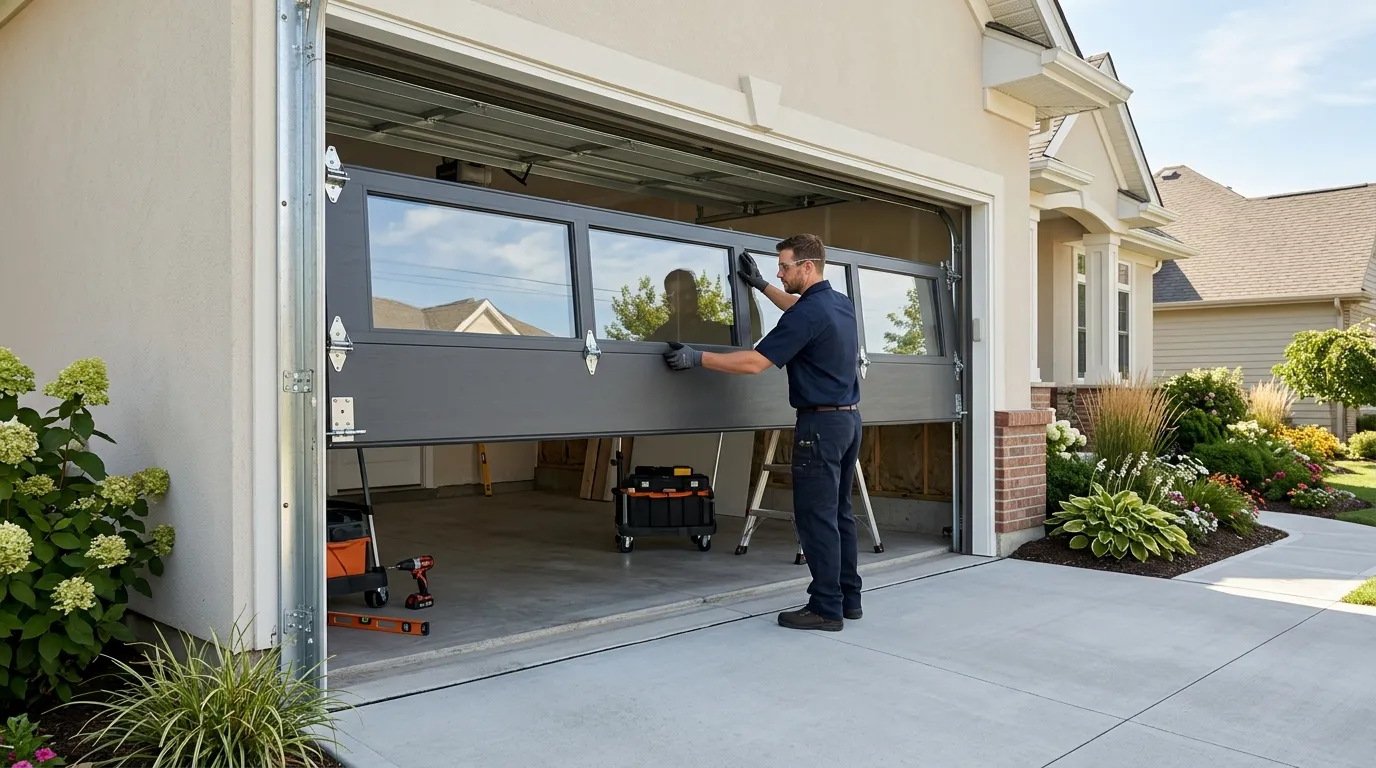
Most of Mission's housing dates to right around 1973, and a door that age has usually been running on its original track brackets for fifty years, even if the door panel itself was swapped out along the way. That matters for how long the job takes. If the track just walked off its brackets - bent by a car bumper, a dog leash, or a spring that let go unevenly - we can usually get the door back on rail and running in one visit. If the bracket holes have worked loose from decades of vibration, or the jamb behind the bracket has softened, we're drilling new mounting points or building out the frame first, which adds time. We come out from Overland Park, about ten miles down the road, so we ask for the door's age and a description of what happened when you call, to bring the right hardware the first time instead of making a second trip for a part we didn't know we needed.
A door installed in Mission in the early 1970s was almost certainly hung on 2-inch steel track, not the 3-inch rail that's been standard on new installs for years now. That difference matters when a door comes off track: the rollers, the bracket spacing, and the drum size on older extension-spring setups don't match current stock parts one-for-one. We carry both the older narrow-track hardware and current rail, along with steel rollers, nylon rollers, and the flag brackets and end bearing plates that tend to crack first on doors this age. What we don't carry on the truck is obsolete decorative hardware or discontinued panel sections - if your door's cosmetic trim is from a line that stopped production years ago, we'll tell you that up front rather than promise a match we can't deliver.
We don't have a published price list for this repair, and we're not going to invent one here. What drives the cost on an off-track call in a house from Mission's era is usually how many brackets need replacing, whether the track itself is bent beyond straightening, and whether the jamb behind it needs shoring up before new hardware goes in. A door that simply slipped off two rollers costs a lot less to fix than one where the track twisted and pulled the header loose. Household income in this part of our coverage area runs a bit lower than some of the closer-in suburbs, and we know that weighs on the repair-versus-replace decision - we'll give you the honest number for what's actually wrong before we start, not a guess over the phone.
An off-track door is one of the jobs homeowners get hurt on, and we'd rather say that plainly than sell you a video. A door under spring tension that's already left its track can drop or swing without warning once you start unbolting brackets, and on a 1973-era extension-spring system the tension is stored in stretched springs over the horizontal track, not in the torsion springs on newer doors - different failure pattern, different risk if you don't know which parts are still under load. If the door is just resting slightly off one roller and hasn't come free of the track entirely, you can sometimes walk it back on by hand with the opener disconnected. Past that point, once a panel is bent or a cable's involved, it's not a weekend fix, and we'd tell you that even if it cost us the call.
Mission sits inside a service area where housing runs 1950 to 2004, but Mission's own median build year of 1973 puts it on the older side of that range, and the doors that came with houses like that were built for a different climate expectation than today's insulated steel panels. This part of Kansas runs a cold, moderate climate band, and fifty winters of freeze-thaw cycling work on steel track brackets the same way they work on foundations - the fasteners loosen, the jamb behind them shifts a fraction of an inch, and the track pulls slightly out of plumb. Add a garage floor that's settled unevenly over five decades, and a door that used to run true starts binding on one side. That's usually what pulls a roller off rail: not one dramatic event, but decades of small movement finally catching up with the hardware.
Houses from Mission's early-1970s building boom often have original track brackets that have loosened over fifty years of freeze-thaw movement in the jamb. Once a bracket shifts even slightly, the track goes out of plumb and a roller eventually walks off the rail, usually during normal opening and closing rather than any single dramatic event.
We carry both narrow 2-inch track hardware common on doors from Mission's era and current 3-inch rail, plus the rollers and brackets that fail most on older extension-spring systems. What we won't have on the truck is discontinued decorative trim from a panel line that's out of production - we'll flag that before starting the job.
About ten miles. We travel out for off-track repairs and ask for the door's approximate age and a description of the problem when you call, so we can bring the right generation of hardware and avoid a second trip.
If it's barely off one roller and the opener is disconnected, sometimes yes. Once the track is bent, a cable is involved, or the door is fully off rail, the stored spring tension makes it dangerous to handle without the right clamps and experience, especially on older extension-spring setups.
Call now or request a free quote - same-day service on most repairs, upfront written pricing.