Overland Park, KS · Garage Door Service
Prairie Village's 1959-era doors run older hardware than the rest of the service area. Overland Park Garage Door Pros explains what breaks and what to do first.
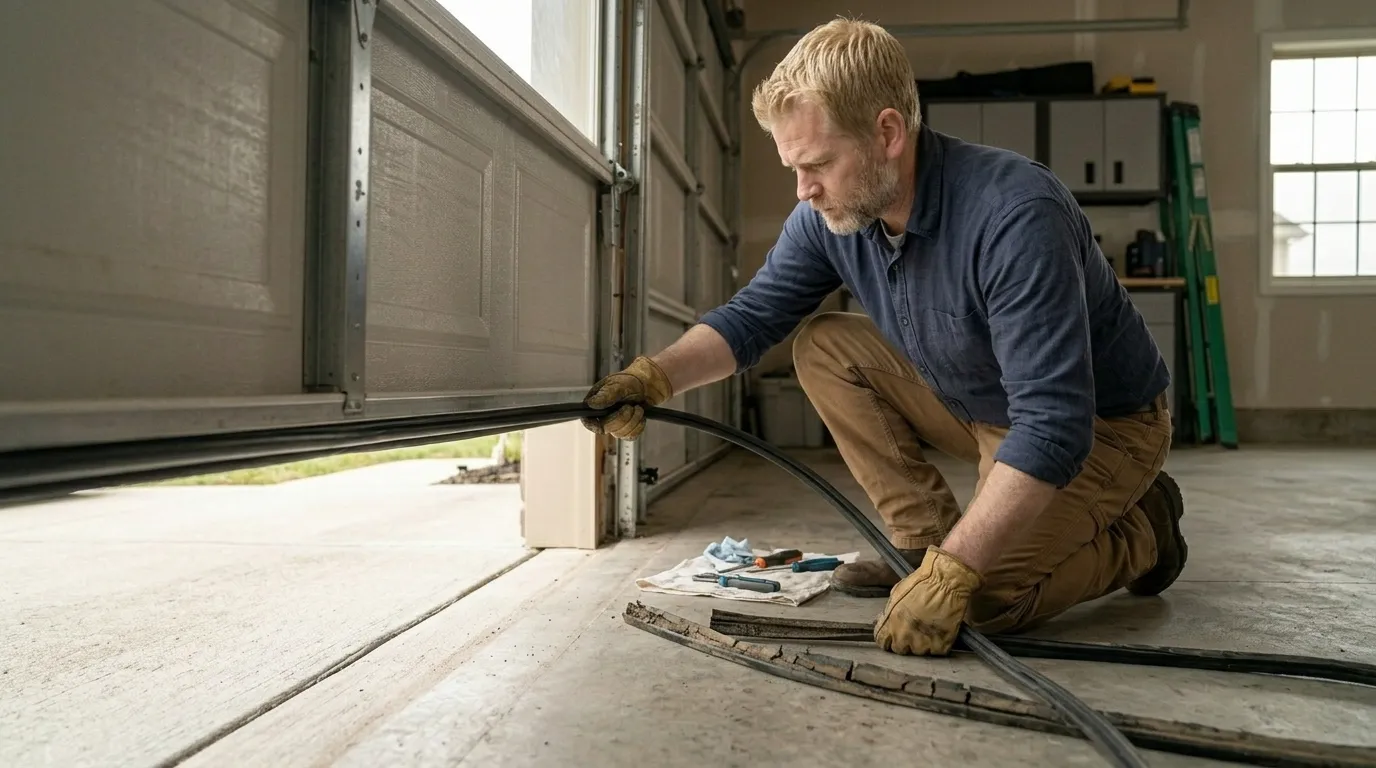
The typical Prairie Village garage was built around 1959, which puts it a good two decades ahead of the 1977 median for the rest of the service area we cover out of Overland Park. That gap matters more than it sounds like it should. A door from 1959 is almost always a single flat steel or wood-panel slab hung on extension springs mounted along the horizontal side rails, not the torsion bar centered above the opening that became standard on houses built after the mid-1960s. Extension springs stretch instead of twist, and they wear differently - the coils fatigue, the safety cables (if they were ever added) corrode, and the stationary cone at the end of the spring cracks from decades of expansion and contraction.
That expansion and contraction is worse here because the region sits in a cold-moderate climate band with real winter-to-summer temperature swings. Steel contracts in a hard freeze, springs lose a little tension every cycle, and a door that's been fine for years will suddenly bind, drop unevenly, or slam the last six inches of travel. On a lot of these houses the opener has been swapped out once or twice already, but the spring and track hardware behind it is original. That's the part that finally lets go.
An extension-spring door that's dropped on one side is not a job to muscle open. The cable on the working side is carrying the full load of the door plus whatever's left of the broken spring's pull, and it can snap the same afternoon. We've seen owners try to prop the door with a two-by-four or crank the opener manually to get a car out - both put a hand or a foot in the path of a few hundred pounds of steel on a compromised cable.
The other way this goes sideways is cost surprise. Prairie Village's median household income runs $107,664, well above the $90,982 average across the wider area we serve, and that shows up in what people expect from a repair call: they want it done right the first time, not patched twice. On a door this old, that sometimes means telling you plainly that a matched replacement spring set costs less over five years than another round of patch repairs on hardware pushing sixty-five years of service. We'll say so if that's the honest answer, even though it's the smaller ticket for us.
Tightening a loose hinge screw or lubricating a track is fine to do yourself. Touching the spring system on a door this old is not, and that's true whether the springs are the original extension type or a torsion upgrade someone added later. Extension springs under tension can release with enough force to break a hand or worse, and there's no way to tell how much life is left in a fifty-plus-year-old spring just by looking at it.
We'll also say plainly what we don't do: if the door itself is a wood panel slab that's delaminated or warped from decades of Kansas weather swings, no amount of hardware repair fixes that - replacement is the honest recommendation, and we'll tell you that on the phone before we ever load the truck. The one thing worth doing yourself in the meantime is disconnecting the opener's manual release and leaving the door down and unlocked by hand until someone can look at it, rather than forcing it through the opener.
If the door is hanging crooked, with one corner low and the other still up near the header, that's almost always a broken or badly stretched extension spring on the low side - common on the original hardware still running in a lot of Prairie Village garages. A loud bang followed by the door refusing to move usually means the same thing, just caught at the moment of failure rather than after.
If the door moves but grinds or jumps at one spot in the track, that's more often a roller worn out from age than a spring problem, and it's a cheaper fix. A door that reverses immediately after closing, or won't close at all, points to the opener's safety sensors or limit settings rather than the spring system - worth checking before assuming the worst. We come out from Overland Park, about 7 miles away, to look at any of these before quoting a fix, because on a door this old the visible symptom and the actual failure aren't always the same part.
On a house built around 1959 like most in Prairie Village, the spring hardware is decades old and steel loses tension as it contracts in cold weather. In a cold-moderate climate with real seasonal swings, that shows up as a door that binds or drops unevenly once temperatures drop, even if it worked fine all summer.
Depends on the door, not just the spring. If the panel itself is sound, a matched spring and cable replacement can extend a 1959-era door for years at a fraction of replacement cost. If the panel is warped, delaminated, or the track is bent from repeated forcing, repair is throwing money at a door that's done.
We work out of Overland Park, about 7 miles from Prairie Village, and we don't publish a fixed response window since it depends on the day's call volume. Call and we'll give you a straight answer on timing before you commit to anything.
Not safely with the opener, and not by hand without real risk. A broken spring shifts the full weight of the door onto the remaining cable and hardware, which can fail without warning. Disconnect the opener's manual release, leave the door down, and call before anyone tries to move it.
Call now or request a free quote - same-day service on most repairs, upfront written pricing.