Overland Park, KS · Garage Door Service
Prairie Village homes went up mostly in 1959, when tracks ran narrower and hinges were lighter. That era of hardware is why doors here jump track. Here's what to check.
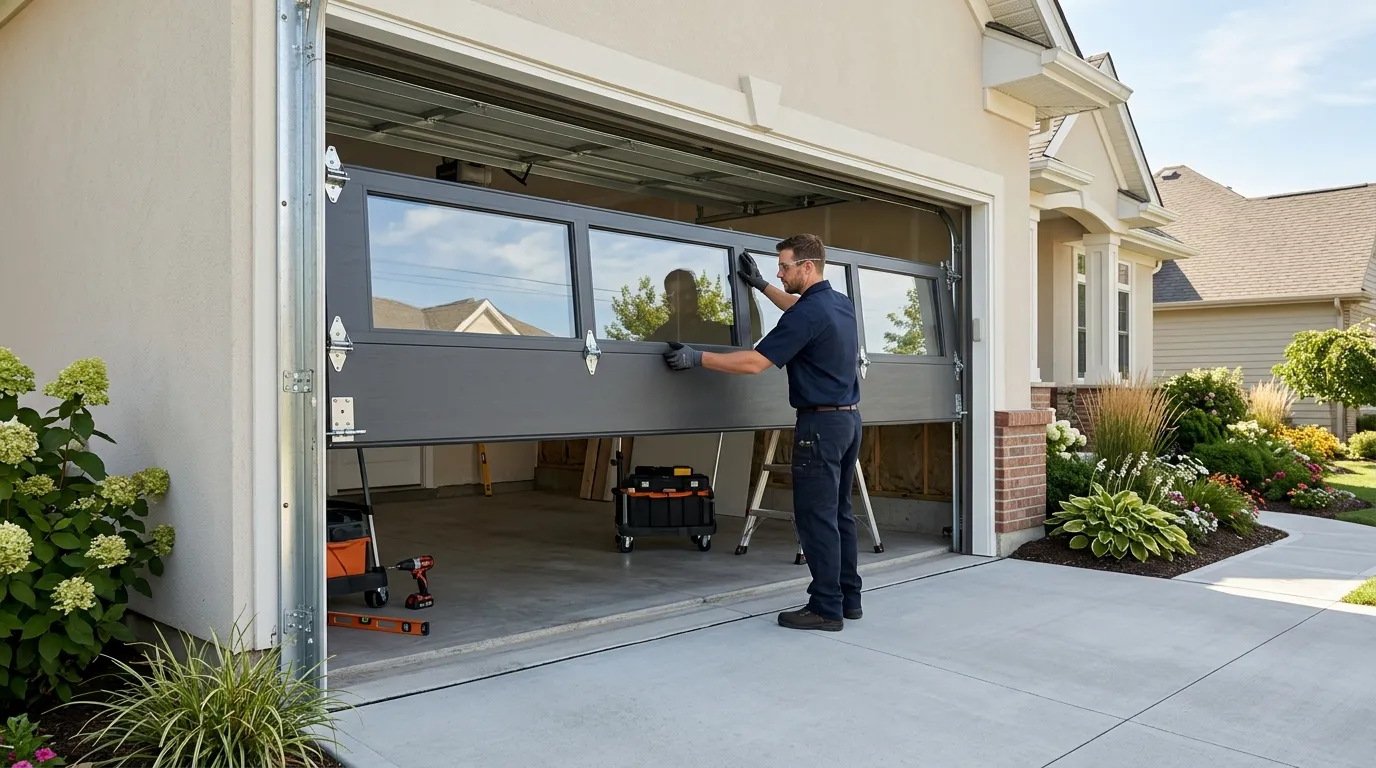
Prairie Village's median home dates to 1959, which puts most of the neighborhood inside the older end of the 1950-2004 build window we see across this service area. Doors from that period, and the replacements homeowners put in through the 60s and 70s to match, ran on narrower track gauge than what's standard now. The rollers were often steel, not nylon, and the track brackets weren't always through-bolted to real framing. Sixty-plus years on, those brackets work loose a little at a time. A door can run fine for years and then jump the rail the first time a roller catches a bent spot or a bracket flexes under a slammed close.
Cold-weather swings matter here too. This area sits in a moderate-cold climate band, so tracks see enough temperature movement each winter to work fasteners loose faster than they would somewhere milder. That's not a dramatic failure - it's slow wear that finally lets go on an ordinary Tuesday.
We don't have a record of which specific streets have had the most calls, so we won't pretend to know your block better than we do. What we can say is that a door built to 1959-era spec, still running on its original or first-replacement track, is a reasonable thing to suspect before anything more expensive.
An off-track door looks simple until someone tries to force it back onto the rail with the opener still running. That's the single fastest way to bend a track section or snap a cable, and it turns a bracket tightening job into a full track replacement. On older hardware like the kind common in Prairie Village, the metal is thinner than what's sold today, so it bends rather than springs back.
The other way this goes sideways: the door looks off-track but the real problem is a broken spring that let the door drop crooked, which then pulled it off the rail. Fixing the track without checking the spring just means the same failure again inside a few weeks. On a two-car door, an unbalanced spring under tension is not something to guess at.
We can't tell you from here whether your bracket is loose, your track is bent, or your spring let go first - that takes eyes on the door. What we can tell you is that guessing wrong on a torsion spring is the one mistake on this job that sends people to urgent care instead of the hardware store.
Tightening a loose track bracket with a socket wrench, on a door that's still sitting square in its opening, is a reasonable weekend job. Prying a door back onto bent track, or working anywhere near a wound spring, is not - the spring on a standard double door holds enough tension to break a hand, and the cost of a bent track section adds up fast next to the cost of getting it looked at once.
A rough rule: if the door is still mostly in the opening and only one roller has hopped the rail near the bottom, that's often a bracket or roller problem you can safely inspect. If the door is hanging crooked, if a cable has come off the drum, or if you hear a bang before it happened, stop and don't touch the spring side of it.
We won't tell you every off-track call needs a truck - some don't. But we also won't tell you it's always a five-minute fix, because on hardware this age it frequently isn't.
A door that's chattering sideways instead of running straight up, a roller visibly sitting outside the track, or a gap between the door edge and the track rail are the usual signs. On older track systems like the kind still on a lot of 1959-vintage Prairie Village houses, you'll also sometimes see the whole track bracket pulled slightly away from the jamb - a sign the wood behind it has taken decades of vibration.
With median household income in this area running well above the broader service area average, a fair number of these calls end in full hardware upgrades rather than patch repairs, simply because the parts on hand are original and nothing matches. That's a homeowner's call to make, not something we push - a tightened bracket and a straightened rail can buy a door another decade if the rest of the hardware is sound.
We cover Prairie Village from Overland Park, about seven miles out, so there's no local branch here - just a truck that comes when called. If you want the full rundown on off-track repair as a service, that lives on our Overland Park off-track page; this page is about what's specific to your street's hardware, not the general job.
Most houses here date to around 1959, and doors and track systems from that era ran narrower rail and lighter roller hardware than what's installed today. Decades of use loosen the brackets holding that track to the frame, and once a bracket shifts even slightly, a roller can hop the rail during normal operation.
Only if the door is sitting mostly square in the opening and the opener is unplugged. If the door is hanging crooked, a cable is off the drum, or a spring looks broken, don't force anything back into place - the tension involved can cause a serious injury.
No. This area is covered from our Overland Park location, about seven miles away. There's no branch or depot in Prairie Village itself - we send a truck out for calls here.
Sometimes, especially on older homes where the bracket is anchored into wood that's been vibrating loose for decades. If it recurs within a season, that's usually a sign the mounting point itself needs reinforcing, not just another turn of the wrench.
Call now or request a free quote - same-day service on most repairs, upfront written pricing.