Overland Park, KS · Garage Door Service
Off-track garage door repair for Roeland Park's 1950s housing stock, serving the whole 10-mile route from Overland Park with same-visit diagnosis and track work.
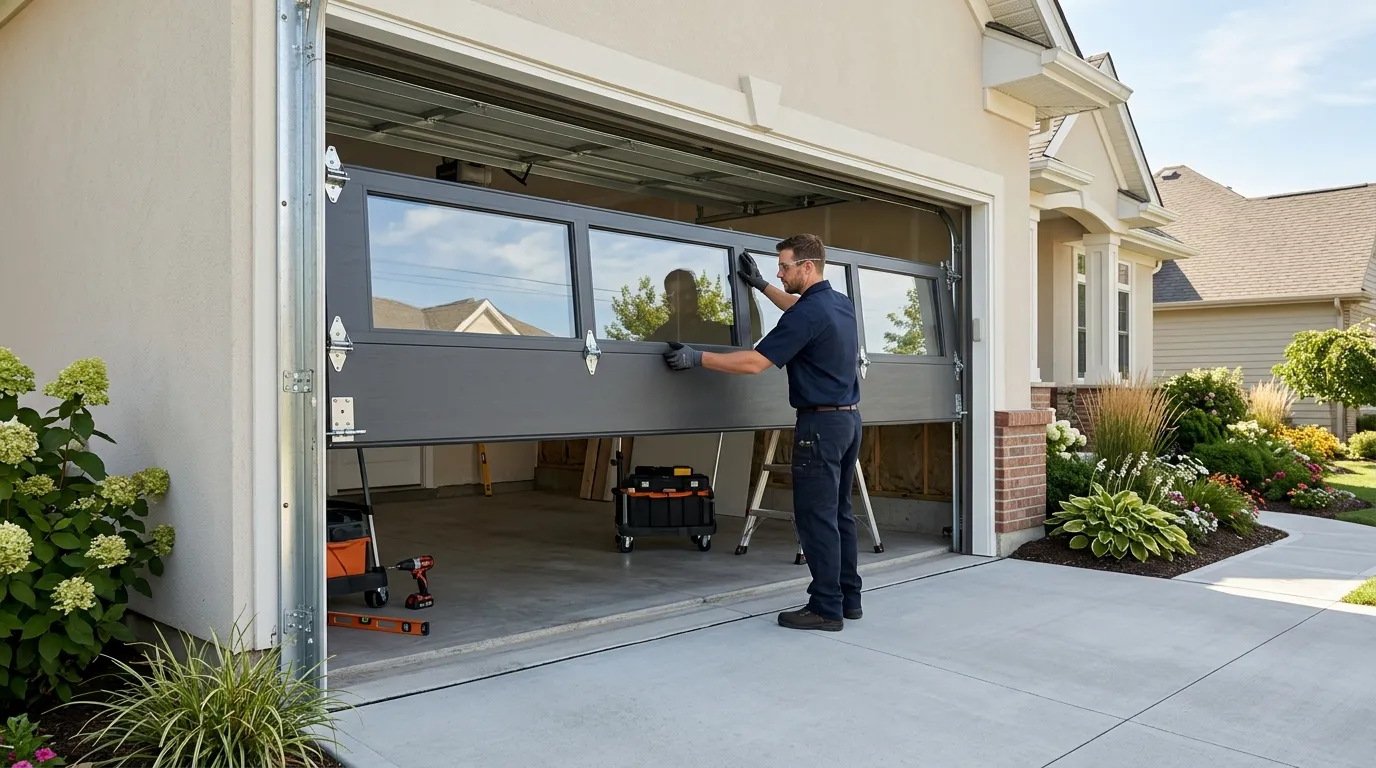
An off-track door in Roeland Park usually isn't a dramatic slam-off-the-rail event. It's a slow creep: one roller walks a quarter inch out of the channel every time the door cycles, and nobody notices until the panel binds hard on one side and the opener starts straining against it. On a door that's been running the same track alignment for decades, that quarter inch adds up fast.
Roeland Park's housing stock skews older than a lot of the wider service area - median year built here lands around 1950, well ahead of the 1977 median across the broader coverage zone. That matters for this specific failure because a lot of these garages were built with narrower single-track hardware and brackets fastened to jambs that have shifted with the house over seventy-plus years. When the frame isn't square anymore, the track isn't either, and the door doesn't derail because of one bad part - it derails because the whole opening has moved out from under the hardware. Re-hanging the door on that kind of frame calls for actually shimming the track back to plumb, not just muscling the rollers back in and hoping.
We see this pattern often enough on the Roeland Park run that we don't treat it as a quick roller swap by default. We check bracket anchoring first.
If a door is only off track on one side and the opener is unplugged, some homeowners can get it back into the channel with a rubber mallet and a pry bar, carefully, with the door manually supported. We won't pretend otherwise.
What we won't talk anyone into fixing themselves: a door that came off track because a cable snapped, or one where the track itself is bent rather than just misaligned. On a house from this era, the track brackets are often original - meaning the mounting holes are worn oval, and forcing a roller back into a track that's flexing under load is how a 150-pound section ends up on the floor of the garage, or on a foot. If the door won't move freely by hand once it's unplugged from the opener, stop and call. That's not a sales line, it's the point where a wrong pull turns a repair into an ER visit.
We run this job from Overland Park, about 10 miles out to Roeland Park, and we quote the visit the same way for every stop on that route: we ask what the door is doing right now - stuck open, stuck shut, hanging on one cable, grinding on one side - before anyone drives out, so the truck shows up with the right hardware instead of guessing twice.
We don't keep a branch or a standing crew in Roeland Park itself; every call here is dispatched from the Overland Park shop, which is worth knowing if you're comparing us against someone claiming a local depot. Book through the coverage page for this area and we'll confirm the visit.
Three things drive most of the off-track calls we take in this part of the coverage area. First, age of hardware - with a median build year around 1950, a large share of these garages still have their original track brackets, and steel that's held screws for seven decades doesn't hold them the same way it did new. Second, the cold-moderate climate band this whole region sits in means the steel track contracts in hard winter cold, and a bracket that's already loose from age can walk enough under that contraction to let a roller jump the rail on the next warm-up cycle. Third, and less dramatic: a lot of these are single-car garages on smaller lots, and a door bumped by a car edging in wrong knocks a bottom roller out before anyone notices anything's wrong until the next cycle jams it.
We don't have year-over-year call volume broken out for Roeland Park specifically, so we won't claim this is more common here than elsewhere in the coverage area - only that the housing age and the climate band both point the same direction on why it happens.
On older track hardware, a bracket that's worked loose doesn't fail all at once - it lets the roller walk a little further out of the channel each cycle. If a door has come off track more than once, the fix is usually re-securing or replacing the bracket, not just re-seating the roller again.
Only if it moves smoothly with no resistance once disconnected from the opener. If it drags, grinds, or hangs unevenly, a cable or spring may be involved and the door can drop without warning. Stop and call rather than forcing it.
No. We dispatch every Roeland Park call from our Overland Park location, about 10 miles away. We ask for the door's symptoms before we drive out so the truck arrives with the right parts for the job.
It can. In this region's cold-moderate climate, steel track contracts in hard winter cold, and a bracket that's already loose from age has more room to shift when that happens, which is when a roller is most likely to jump the rail.
Call now or request a free quote - same-day service on most repairs, upfront written pricing.