Overland Park, KS · Garage Door Service
Spring Hill homes run newer than most of our service area, and that changes what breaks on a garage door cable. We drive the 12 miles from Overland Park to fix it right.
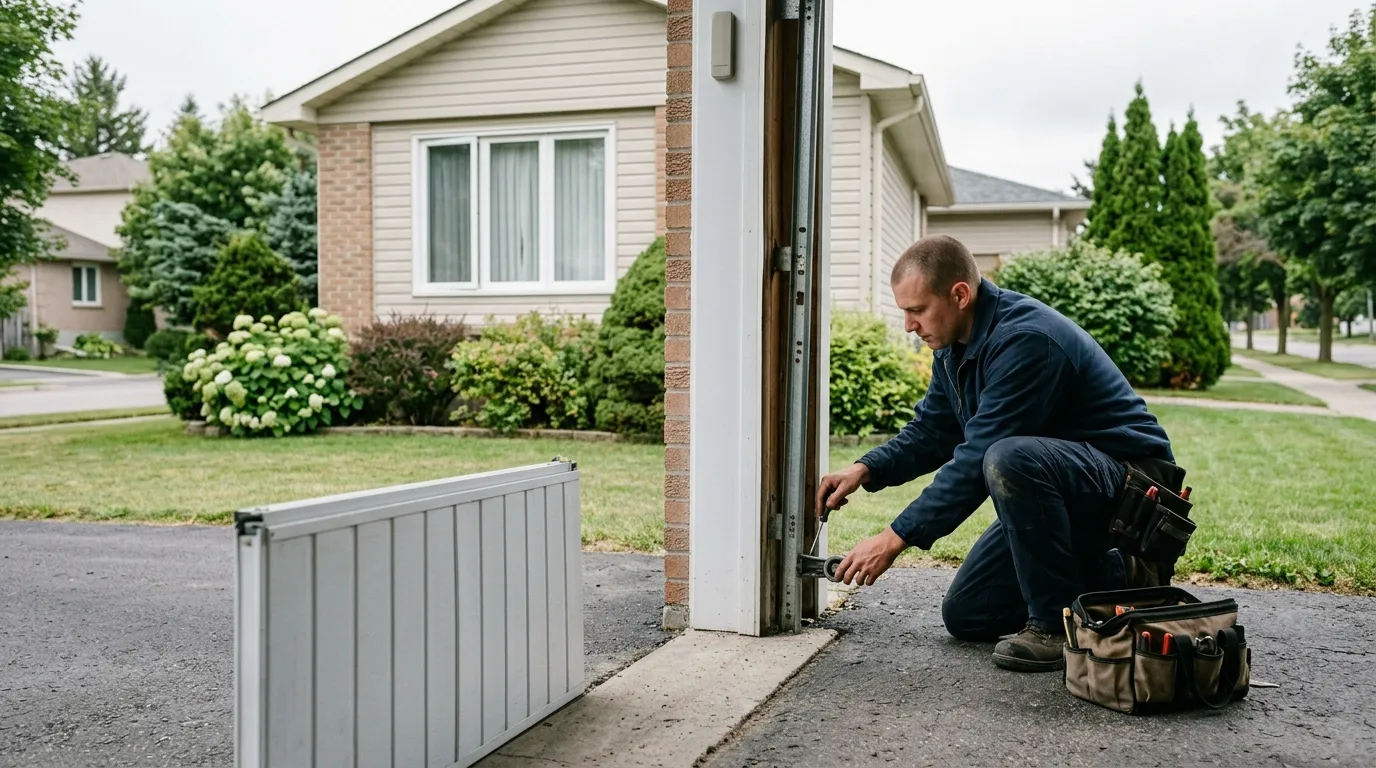
Spring Hill sits about 12 miles out from our shop in Overland Park, which is the longest run we make on a regular cable call. That drive matters less for whether we show up than for how the call gets scheduled - a snapped cable here often gets grouped with another job on the south end of the service area so the trip pencils out, rather than treated as a stand-alone run. Once we're on site, though, the job itself tends to be more straightforward than what we see closer in. Spring Hill's housing stock is younger than most of the area we cover, with a median build year around 2004, decades newer than the 1977 median across the wider territory. Newer construction generally means factory-installed torsion spring systems with steel lift cables sized to code, not the mismatched extension-spring setups you find on older doors. The failure is usually a straight one: a frayed or snapped lift cable on one side of the door, sometimes both if the door's been run unevenly for a while. That's the good news. The bad news is a cable rarely fails alone - if it's frayed enough to snap, the drum or the roller it rode against usually has some wear too.
With most Spring Hill garage doors dating to the early 2000s or later, the cables we're replacing are original or close to it - twenty-plus years of use is enough for the galvanized coating to wear through at the drum, especially on the cable's high-friction wrap point. That's a fatigue failure, not a defect, and it shows up as fraying strands before it shows up as a full break, if anyone looks. The other driver is winter. This part of Kansas sits in a cold, moderate climate band, and repeated freeze-thaw cycles stiffen the lift springs and cables enough that a cable already thinning at the drum can give out on a cold morning when the door's asked to lift a little harder than usual. We don't see the salt-corrosion cable failures you get near coastal service areas - this area's issue is straight mechanical wear plus cold-weather load, not rust from road treatment. Households in Spring Hill also tend to run a two-car door on a single opener setup more consistently than older neighborhoods closer to Overland Park, which puts more even wear across both cables - useful to know when only one has failed and the other's due.
We replace both lift cables as a pair, even if only one broke - the other is the same age and has carried the same cycles, so replacing it now costs a lot less than a second trip later. We check the drums and the bottom brackets for the cable at the same time, since a burred drum edge is often what shredded the cable in the first place, and a new cable running over the same rough spot won't last either. If your opener has been fighting the imbalance from a partial cable failure, we'll check the travel limits and force settings before we leave, because a door that's been lifting unevenly for a few weeks can throw the opener's calibration off even after the cable's fixed. We size the replacement cable to the door and drum you have rather than a generic length, which matters more on newer torsion systems than the older extension setups where a slightly-off length was more forgiving.
We don't have a set price to quote here without seeing the door - cable gauge, drum condition, and whether the opener needs recalibrating after the fact all move the number. What we can tell you is that a straight cable-pair replacement on a torsion system, without spring or drum damage, is one of the more predictable repairs we do, and it's not a job that benefits from waiting once you've noticed fraying. A cable that lets go while the door's mid-travel can drop that side hard enough to bend the track or crack a bottom panel, and that turns a cable job into a track-and-panel job.
A garage door under torsion spring tension is not a safe DIY cable swap, full stop - the spring holds enough stored force to snap a broom handle, and a cable failure under load is exactly the kind of thing that puts people in the ER. If you're just trying to figure out whether it's the cable or something else before you call, look for a door that's noticeably crooked when it's partway open, a visible frayed strand at the bottom bracket, or a door that won't budge at all with the opener disengaged. Any of those, leave the door down and call it in rather than pulling the release cord to test it yourself.
It doesn't take longer to quote, but scheduling can shift by a day since Spring Hill is about 12 miles from our Overland Park base, the longest regular run in our service area. We often pair it with another call nearby to keep the trip efficient, which is a scheduling factor, not a sign we're not coming.
Mostly in age and setup, not material. Spring Hill's median home build year is around 2004, much newer than the 1977 median across our wider service area, so most doors here have factory torsion systems with steel lift cables rather than the older extension-spring setups common on 1960s and 70s homes closer to Overland Park.
You can, but we don't recommend it. Both cables are the same age and have handled the same number of open-close cycles, so if one's worn through, the other is close behind. Replacing the pair now costs less overall than a second service call in a few months.
Call now or request a free quote - same-day service on most repairs, upfront written pricing.