Overland Park, KS · Garage Door Service
Most Overland Park houses date to the 1960s and 70s, built years before modern insulation codes, and cold winters find every gap in an old garage door.
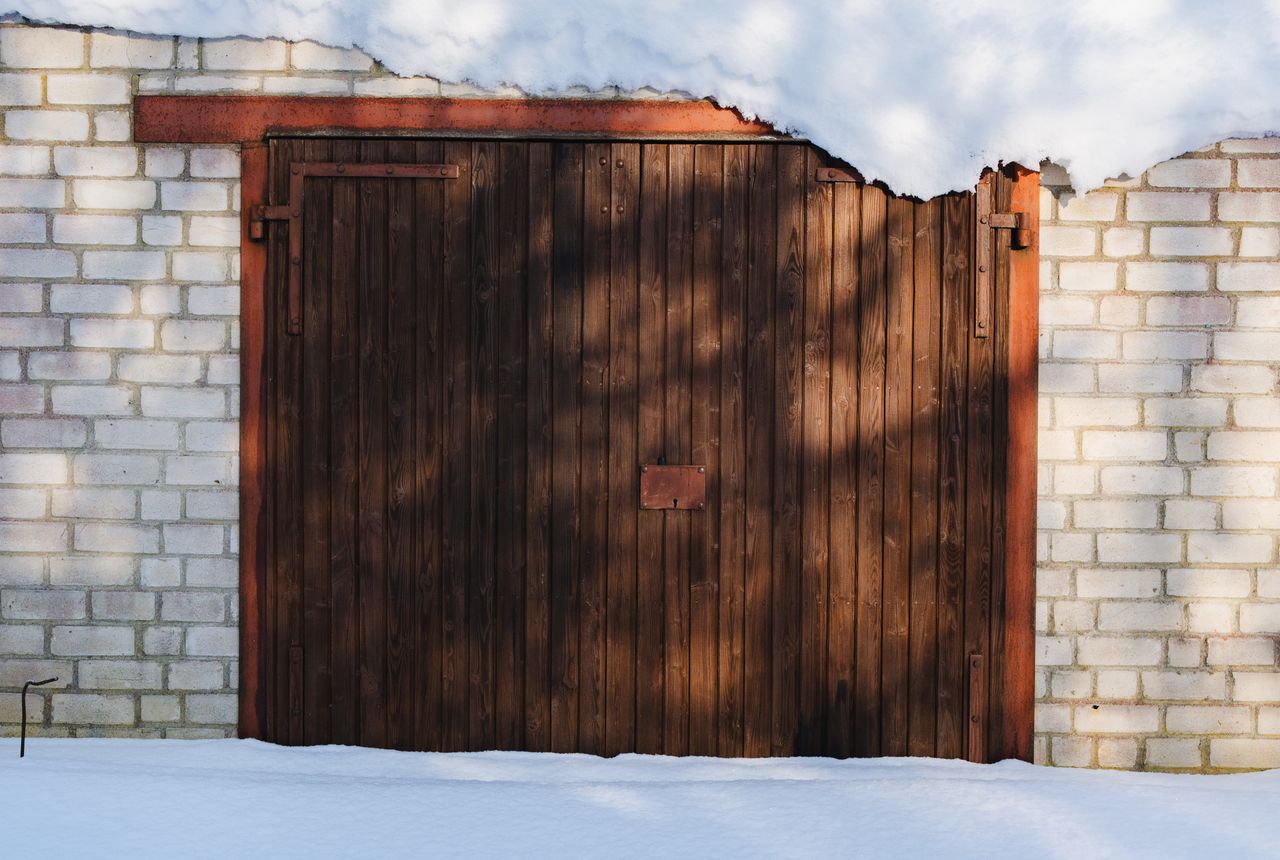
The service area sits in a cold moderate climate band, which means real winter cold, real temperature swings, and a heating season long enough to matter to whatever is hanging between your garage and the house. That swing is hard on a door that was never built to handle it. Steel contracts, weatherstripping stiffens and cracks, and any gap that was loose in October turns into a draft by January. If your garage backs onto a bedroom or a laundry room, you feel it inside before you ever notice it at the door itself.
It's not dramatic. Nobody's door falls off the track because of cold. What happens instead is slower: springs lose a little tension in the cold, openers strain a little harder to lift a door that's stiffer than it was in summer, and rollers that were already worn start binding in the track. None of that shows up as an emergency until the morning it does. The season doesn't break your door. It finds whatever was already going to break it and moves the date up.
Housing across this area was mostly built between 1950 and 2004, with a median year of 1977, and the bulk of the stock across the 15 named neighborhoods we cover clusters in the 1960s and 70s. That matters because garage door insulation wasn't a standard feature on houses built in that window. A door installed on a house from 1965 is very likely a single steel skin with no foam core behind it, hung on hardware that was fine for its era but was never rated for the loads or the cold cycling we ask of it now.
That's the plain fact behind a lot of the calls we get: not a bad door, just an old one doing a job it wasn't built for. Springs sized for a lighter, uninsulated panel get replaced with heavier stock when someone finally swaps in an insulated door, and if that resizing doesn't happen, the opener takes the strain instead. We see original one-piece doors and their matching torsion hardware often enough that finding parts for them is its own small chore, since a lot of that hardware simply isn't made anymore.
This isn't unique to one street. Leawood, Prairie Village, Mission Hills, Roeland Park, and the other communities within about ten miles share the same build era, so the same aging-door problem shows up across all of them, not just here. Corporate Woods and Executive Hills, both just a few miles out, have their own mix of older commercial and residential structures with similar-vintage doors on similar-vintage openers.
Across the service area there are roughly 59,351 households and about 35,227 owner-occupied houses, with a median household income of $90,982. That income level means most owners here can absorb the cost of a proper insulated replacement when a door finally needs one, and plenty do exactly that rather than keep nursing an original panel. But a fair number also choose to reweatherstrip and reseal an old door instead, especially if the springs and track are still sound, and that's a reasonable call as long as someone actually checks the hardware while they're at it instead of just caulking the gaps and hoping.
Call before the door fails outright if you notice the door getting harder to lift by hand, a grinding or popping sound from the torsion spring area, or daylight showing around the edges of a door that used to seal tight. Those are cheaper problems in November than they are in January when a cold snap finishes off a spring that was already fatigued.
One honest limitation: we don't stock every original part for the one-piece doors and matched hardware still on a lot of houses from the 1960s and 70s. Some of that hardware hasn't been manufactured in decades, and if your track or hinge set is original, there's a real chance the fix is a modern replacement part adapted to fit, or in some cases a full door swap, rather than an exact match. We'll tell you straight which one makes sense before we start, because on a door that old, throwing a new spring on old track sometimes just moves the next failure a few months down the road instead of fixing it.
It's possible. A lot of houses from that era across this area still have their original one-piece steel door and matching torsion hardware. If you've never replaced it, that's a reasonable guess, and it's worth having someone check the spring and track condition rather than waiting for a failure in cold weather.
Cold stiffens weatherstripping and tightens metal on metal in the track, and torsion springs lose a bit of lift in low temperatures. On an older, uninsulated door with worn rollers, that combination adds up fast. It's usually not one single failure, it's several small ones stacking up at once.
Sometimes. If the panel and hardware are still sound, adding weatherstripping and a bottom seal helps. But a single steel skin from the 1960s or 70s doesn't take foam retrofits well, and if the springs are original too, a full insulated replacement is usually the more honest fix long term.
Call now or request a free quote - same-day service on most repairs, upfront written pricing.