Overland Park, KS · Garage Door Service
Serving Overland Park homes built mostly in the 1960s and 70s, we fix the spring, track, and opener failures that come with original hardware and cold winters.
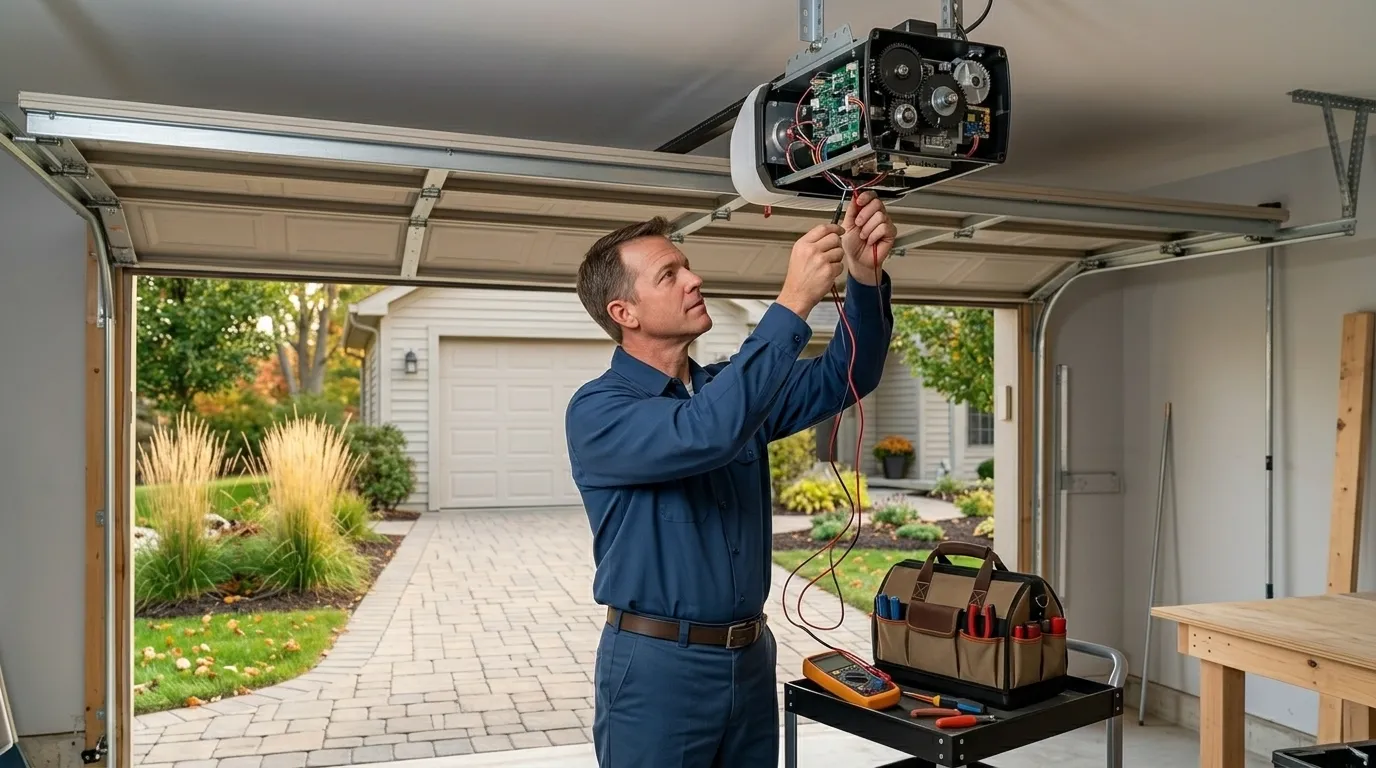
Most calls in Overland Park break down into two buckets: a spring or cable job that we finish in one visit, usually under two hours once we're on site, and an opener or track repair that can run longer if the unit is original to the house. Homes here were built between 1950 and 2004, with the median landing around 1977, so a lot of what we open up is hardware nobody has made in decades. If a part isn't a standard stock size, we tell you that up front rather than guessing at a timeline. Same-day service is realistic for the common failures - broken torsion springs, snapped cables, off-track panels. It's not realistic when we have to source a bracket or drum for a door that's older than the driveway it sits on, and we won't pretend otherwise on the phone.
A door that slams the last foot instead of settling, a loud bang followed by a door that won't lift, or an opener that runs but the door barely moves - these are the calls we get most across the 15 named areas in this service territory, from Corporate Woods and Executive Hills down through the older sections near Oak Park. If the door only moves a few inches with the opener and then stalls, that's almost always a spring that's lost tension, not a motor problem, no matter what the opener's grinding sounds like. If one side of the door dips lower than the other when it's open, look at the cable on that side before you look at anything else.
The housing stock across this service area is mostly 1960s and 70s construction, and that generation of garage door hardware was built to last twenty, maybe thirty years under normal use - not fifty-plus. A lot of these doors have had one or two motor swaps but never a spring or track replacement, which means the spring doing the lifting today is the same one installed when the house was framed. Add a cold-moderate climate to that: steel contracts in winter, torsion springs lose a measurable amount of lifting force in hard cold, and a spring that was already near the end of its cycle count tends to let go on the first bitter morning rather than gradually. That combination - original 1970s-era springs plus a real winter - is why late-fall and January are when our phone rings the most for snapped springs rather than worn openers.
Changing a broken torsion spring yourself is not a project we'd talk you into, and I'll say plainly why: the spring is under enough tension to break a wrist or worse if the winding bar slips, and the tools for doing it safely aren't things most people own or want to buy for a one-time job. Swapping a roller, tightening loose track bolts, or replacing weatherstripping - those are fair DIY jobs if you're comfortable with a ladder and a wrench. Anything involving the spring, the cable drums, or the torsion bar itself is where we'd rather you call. It's not about selling a visit; a spring job done wrong tends to come back as an emergency call, and by then the door's usually damaged too.
Torsion springs lose lifting force in cold weather, and a lot of homes here still have springs original to construction from the 1960s and 70s. A spring that's already near the end of its cycle life tends to snap on a cold morning rather than fail gradually, which is why winter is our busiest season for spring calls.
Once an opener is that old, parts get harder to source and the gears inside have usually worn well past what a single repair fixes for long. We'll always look at the specific unit before recommending replacement, but original hardware from that era rarely justifies repeated repair visits.
Same-day service is realistic for common failures like a broken torsion spring or snapped cable. If the job needs a part sized for older, non-standard hardware, we'll tell you honestly if that changes the timeline before we schedule anything.
Call now or request a free quote - same-day service on most repairs, upfront written pricing.