Overland Park, KS · Garage Door Service
Most Overland Park houses date to 1950-2004, with a lot of 1960s-70s stock. Here's how to tell if your original door is worth repairing or replacing.
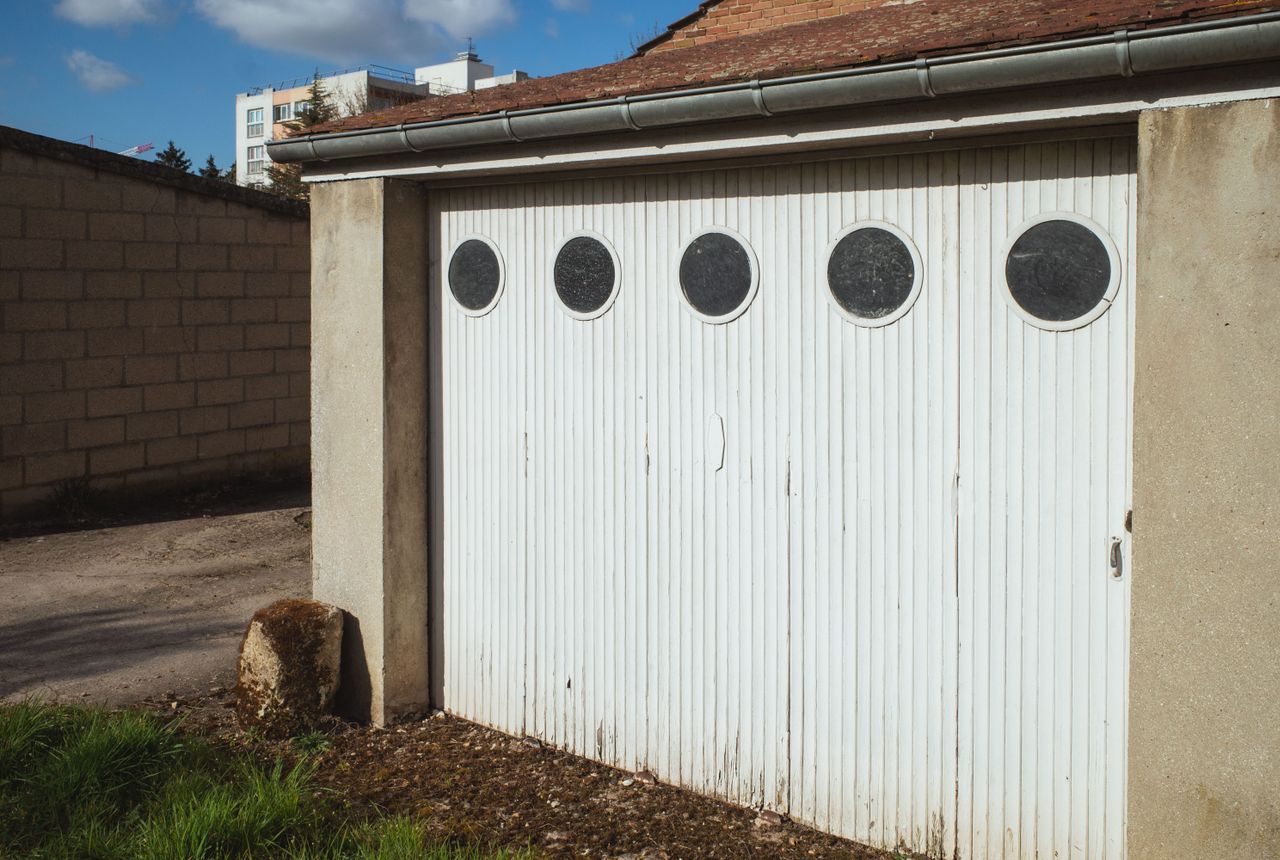
Overland Park sits in a cold-moderate climate band, which means the door gets asked to do two different jobs depending on the month: hold back winter cold that stresses steel and hardware, then handle summer humidity swings that swell wood panels and tighten tracks. On a door that's already 30 or 40 years old, that seasonal flexing is what finally cracks a weld or snaps a spring that's been fine for a decade. If your door was fine in September and started binding or groaning once the cold set in, that's not the door failing out of nowhere - that's the cold finding the weak point that was already there. Same in reverse come spring, when a track that was tight in January suddenly has slack. None of this means the door is done. It means the door is telling you where it's tired, and a tech who knows what cold-band houses in this area go through can usually tell in five minutes whether that's a spring, a track alignment, or a panel that's finally warped past saving.
A big share of the houses in this area were built between 1950 and 2004, with the median landing around 1977, and a lot of the stock across the named neighborhoods here clusters in that 1960s-70s window. That matters because a door installed with a house from that era is often still running its original hardware - torsion springs rated for a lighter door, tracks sized before insulated panels became standard, openers with none of the safety reversal sensors required now. None of that is automatically a problem. It's a problem when one piece fails and the rest of the system is old enough that fixing the one piece just exposes the next one. That's the actual question with an older door: not 'does it still open' but 'how many parts on this door are the same age as the house.'
Cold-moderate climate doesn't hit a garage door the way a coastal or desert climate does - there's no salt air eating the hardware, no extreme heat baking the seals every day. What it does instead is cycle. Steel contracts in cold snaps and expands back, springs lose a little tension with every cycle, and a wood or wood-composite door from the 1960s-70s wave can swell just enough in a wet spring to bind against a track that was never adjusted for it. Houses in that era generally weren't built with an insulated door as standard, so an original single-layer panel is also just a cold-air leak into the garage every winter. That's not a safety issue, but it's worth knowing before you spend real money fixing a door that's leaking heat regardless.
A door from the 1960s-70s stock common in this area is worth fixing when the problem is one part: a spring, a cable, a roller, a sensor. Those are straightforward jobs on a door that's otherwise sound. It's worth replacing, not fixing, when the panels themselves are warped or the track has been reshaped by years of a door fighting it, because at that point you're paying to patch a frame that's already lost its shape - and that's money that doesn't come back if the next cold snap undoes the fix. I'll say plainly: I can't tell you which one your door is over the phone. Parts availability on older torsion hardware also isn't instant - some of it has to be ordered, and I won't pretend otherwise. A look at the door tells the story faster than a guess ever will.
Not necessarily. In a cold-moderate climate like Overland Park's, steel hardware contracts in the cold and can bind slightly, especially on older tracks. It's worth a look if it's gotten worse each winter, since that usually means a spring or track alignment issue is slowly getting worse rather than staying steady.
Age alone isn't a safety issue. The concern with 1960s-70s stock is usually the opener, since older units often lack the auto-reverse safety sensors required now. The door panel and hardware can often keep going for years if the spring and cables are in good shape.
If the failure is a single part - spring, cable, roller - repair almost always wins. If the panels are warped or the track has bent from years of strain, replacement usually costs less over time than repeated patching. I can't give a number without seeing the door, but that's the split that matters.
Call now or request a free quote - same-day service on most repairs, upfront written pricing.