Overland Park, KS · Garage Door Service
Garage door repair for Overland Park homes built 1950-2004, where original torsion hardware and cold winters wear out springs and rollers fast. Same-day calls.
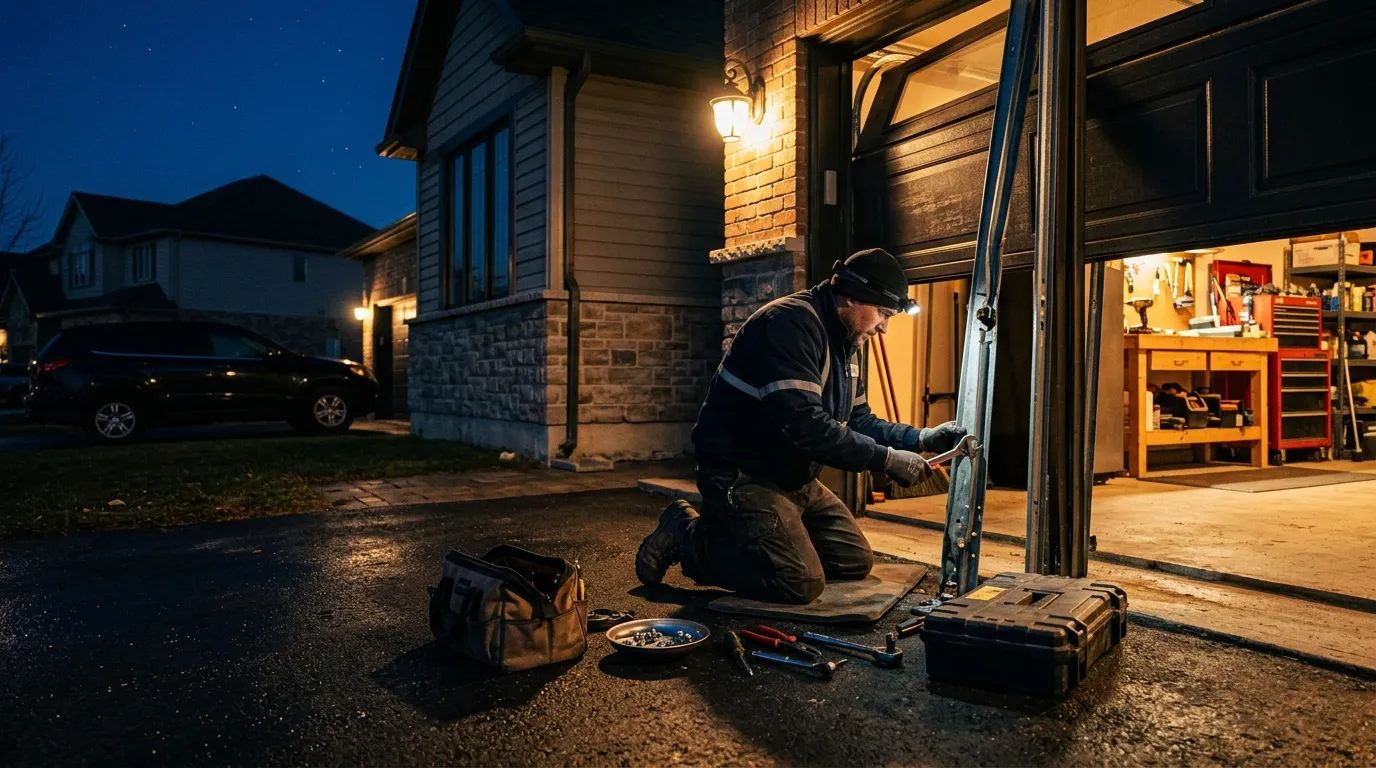
Most repair calls in Overland Park run one to two hours once we're in the driveway - a broken torsion spring, a cable off the drum, or a roller that's finally seized after years of cold-weather use. We diagnose on arrival because the fix depends on what's actually failed, not just what the door is doing. A door that won't move could be a snapped spring (fast fix) or a burnt-out opener motor (different job, different parts). Homes across this service area were mostly built between 1950 and 2004, with a heavy concentration in the 1960s and 70s, so a lot of what we see is original or near-original hardware that's simply reached the end of its cycle count. That's a known quantity, not a mystery, and it's why most calls don't turn into all-day jobs. The exception is anything needing a special-order part for an older door - if your panel or track was sized for a house built before manufacturers standardized dimensions, sourcing a match can add a day or two. We'll tell you upfront if that's the situation instead of guessing.
The door won't budge and there's a visible gap or kink in one of the springs above the door - that's a torsion spring snap, the single most common call we get. Less dramatic but just as common: the door shudders partway up, a cable has slipped off its drum, or the opener runs but the door doesn't move because a roller has locked up in its track. In colder stretches, garage doors on original hardware sometimes bind stiffly for the first cycle of the morning before loosening up - that's the metal contracting overnight in a cold-band climate like ours, and it's a sign the lubrication and spring tension are due for a look, not necessarily a full replacement yet.
Overland Park's housing stock leans older than a lot of newer subdivisions elsewhere - median build year sits around 1977, and across the 15 named areas we cover, most homes still carry hardware installed decades ago. Torsion springs are rated for a set number of open-close cycles, and a spring installed when a house went up in the 1960s or 70s has had a very long time to use up that rating. Add a cold-moderate climate to the mix: steel contracts in low temperatures, which stiffens springs and tightens tolerances on rollers and tracks right when the metal is already brittle from age. That combination - old spring, cold snap - is what turns a slow-motion wear problem into a sudden snap on a January morning. It's not that Overland Park doors are built worse; it's that a large share of them are original equipment meeting winters they weren't engineered to handle indefinitely.
Cleaning and lubricating rollers, tightening loose hinge bolts, checking weatherstripping - all fine to do yourself. Torsion springs are not. They're wound under enough tension to break bones or worse if the winding bars slip, and it's not a job we recommend attempting without the right tools even if you've watched a video. If your door is stuck and you're not sure why, the safer move is to disconnect the opener (pull the release cord) and leave the door alone rather than force it by hand, which can bend track or strip a cable further. One honest limit on our end: if your door and opener are old enough that the manufacturer no longer makes matching parts, we'll say so and talk replacement instead of quoting a repair that won't hold.
Cold makes steel contract and stiffen, which adds strain to a spring that's already near the end of its rated cycle count. A lot of Overland Park homes built in the 1960s and 70s still have original or first-replacement springs, so the combination of age and a cold snap is a common trigger for a snap rather than a slow failure.
Yes, though sourcing parts for a door built before standardized dimensions became common can take longer than a same-day fix. We'll check what your door and track actually measure before ordering anything, and tell you upfront if it's a special-order part.
We don't recommend it. Torsion springs are wound under high tension and a slipped winding bar can cause serious injury. It's one of the few garage door jobs where the tools and the risk genuinely aren't worth the savings for a homeowner doing it once.
If the opener motor runs (you hear it) but the door doesn't move, that usually points to the opener, a cable, or a roller. If the door won't move at all and you see a gap in the coiled spring above the door, that's almost always a broken torsion spring.
Call now or request a free quote - same-day service on most repairs, upfront written pricing.